

Local SEO vs organic SEO is one of those questions I get almost every single week from small business owners, and honestly, the confusion is completely understandable — because most marketing blogs lump them together or explain them so vaguely that you walk away more lost than before you started reading.
Here’s my take: these are two genuinely different strategies, they serve different goals, and if you pick the wrong one for your business, you’ll spend months creating content or optimizing listings that do absolutely nothing for your bottom line.
I’ve worked with local service businesses — plumbers, therapists, boutique fitness studios — and I’ve also worked with online-only entrepreneurs trying to pull in organic traffic from across the country. The playbook is not the same. At all.
So in this post I’m going to cut through the noise and give you a straight answer: what local SEO actually is, what organic SEO actually is, how they overlap (because they do), and most importantly — which one your specific business should be focusing on right now.
What Local SEO and Organic SEO Actually Mean (And Where People Get Confused)
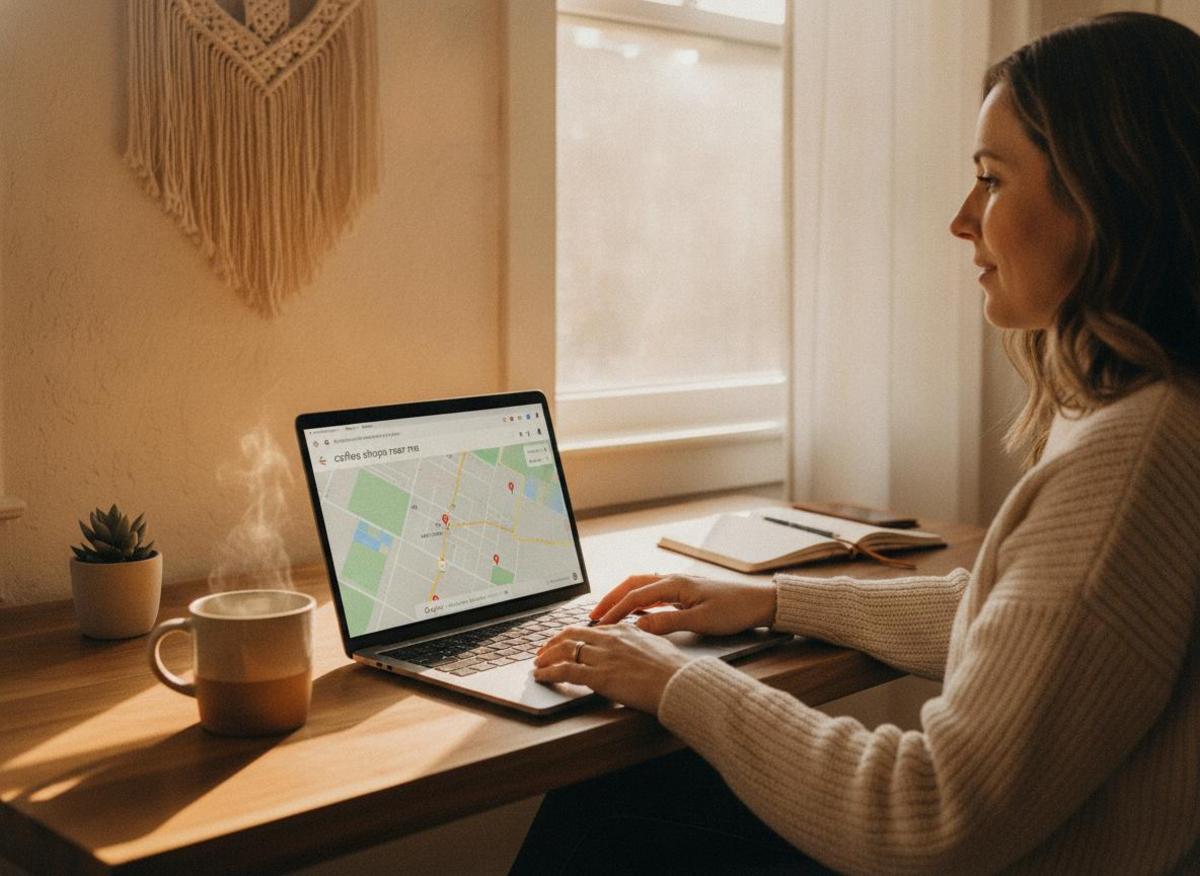
Let me start by clearing up something I see people mix up constantly, even clients who’ve been running businesses for years. Local SEO and organic SEO are not the same thing, and treating them like they are is one of the fastest ways to waste your budget. Organic SEO is what most people picture when they think about search optimization — it’s the work you do to rank your website pages in Google’s regular search results, the ones that show up based on relevance, authority, and content quality. You’re chasing organic traffic from people who might be searching from anywhere: another city, another country, doesn’t matter. The geography is basically irrelevant. You write a great article about “how to choose a project management tool,” and someone in Tokyo finds it. That’s organic search doing its thing.
Local search optimization is a completely different game. It’s about showing up when someone searches for something with geographic intent — “plumber near me,” “best Italian restaurant in Cologne,” that kind of thing. This is where your Google Business Profile becomes arguably more important than your website, and where the local map pack (those three highlighted results above the regular listings) is the real prize. When I work with a brick-and-mortar business or a service provider who only covers a specific region, this is the strategy I push hard. The signals Google uses to rank you locally — proximity, reviews, citation consistency, your GBP completeness — are fundamentally different from the domain authority and backlink signals that drive traditional organic rankings. Conflating the two when planning your strategy is like training for a marathon by doing sprint drills. Related, sure. Interchangeable? Absolutely not.
The confusion usually comes from the fact that both involve Google, both involve keywords, and both can technically increase your visibility in search. But when someone asks me about local SEO vs organic SEO, I always ask them one question first: does it matter where your customer is standing when they search for you? If the answer is yes, that changes everything about how we approach the work.
Local Search Optimization vs. Organic Traffic: The Real-World Difference in Results

Here’s where I see people waste months of effort: they pour everything into organic traffic because some guru told them “content is king,” meanwhile their local competitor with a half-decent Google Business Profile is scooping up every ready-to-buy customer in a five-mile radius. I’ve worked with enough small business owners to know that the difference between local search optimization and broader organic SEO isn’t just tactical — it’s a completely different game with different timelines, different intent, and honestly, different kinds of wins. Organic SEO builds authority slowly, compounds over time, and can pull in readers from anywhere on the planet. Local SEO gets someone through your door or on your phone this week. Neither is better in the abstract, but one of them might be dramatically more relevant to where your business actually makes money.
When I look at the data from local vs national SEO campaigns side by side, the contrast is striking. A plumber ranking locally for “emergency pipe repair [city name]” is capturing someone with their wallet already open and water on the floor. That’s a fundamentally different searcher than someone Googling “how does pipe corrosion work.” Organic traffic can be enormous in volume, but volume means nothing if the intent doesn’t match what you’re selling. I’ve seen local businesses triple their inbound calls within 90 days of cleaning up their local SEO vs organic SEO priorities — not because organic doesn’t matter, but because they finally stopped ignoring the channel that was most directly connected to revenue. Local search rewards relevance and proximity. Organic rewards depth and authority. These aren’t the same muscles.
What I always tell clients is to be brutally honest about their customer geography first. If 80% of your customers live within 20 miles of you, and you’re spending all your energy chasing blog traffic from people who will never drive to your location, you have a strategy problem disguised as a content problem. Nail down where your buyers actually come from before you decide which approach deserves your next six months of effort.
How to Decide Which SEO Strategy Your Business Actually Needs Right Now

After years of working with clients ranging from solo plumbers to e-commerce stores shipping nationwide, I’ve landed on one question that cuts through all the noise: who are your customers, and where do they find you? That’s genuinely it. If your best customers are within a 20-mile radius and they’re Googling something like “emergency electrician near me” at 9pm on a Tuesday, then pouring your energy into broad organic traffic is honestly a waste of your time and budget. You need local search optimization, a polished Google Business Profile, and a strategy built around the neighborhoods you actually serve. But if you’re selling digital courses, software, or physical products to anyone with a shipping address and a credit card, then local SEO is largely irrelevant to your growth — and chasing it would actively slow you down.
Here’s the honest framework I use with new clients: I ask them to describe their last ten paying customers. Where did they come from geographically? How did they find the business? If the answers are scattered across different cities, states, or even countries, that’s your signal to invest in organic traffic — content, authority building, topical depth. If the answers are all within a specific metro area or region, and especially if the business depends on physical visits or local service calls, then the local vs national SEO debate is already settled. You don’t need to agonize over it. The data in your own CRM is already telling you the answer.
Where it genuinely gets complicated is in the middle — businesses that serve a local market but also want to grow beyond it, or service providers who work remotely but still want to dominate a specific city as a home base. That’s where I see the most confusion, and honestly the most wasted ad spend. In those cases, I usually recommend starting with whichever channel maps most directly to your current revenue, building traction there first, and then expanding. Trying to run both strategies simultaneously without enough resources almost always means doing both of them badly. Pick the one that feeds your business today, do it well, and grow from there.
Final Thoughts
I’ve worked with enough businesses to know that the local SEO vs organic SEO question isn’t just an academic one — it’s the difference between showing up for the right people at the right moment or spinning your wheels wondering why the traffic isn’t converting. The good news is that once you understand which game you’re actually playing, everything — your content, your Google Business Profile, your time — starts working a whole lot harder for you. Most of my clients see a real shift the moment that clarity clicks into place.
So take a honest look at your business. Are people searching for someone nearby, or are they searching for information you can provide from anywhere? That single question will tell you almost everything you need to know about where to focus your energy first. Start there, build deliberately, and the results will follow.
What’s your take on this? I’d love to hear it. 👇