

If your short form video marketing strategy 2026 still looks like it did two years ago — post daily, chase trends, pray for virality — I need you to stop and read this before you film another thing.
I spent the better part of last quarter auditing video strategies for about a dozen small business owners and solo founders, and I kept seeing the same exhausting pattern: people grinding out Reels and TikToks at a pace that would break a full production team, getting mediocre results, and quietly burning out by month three. That is not a content strategy. That is a content treadmill.
Here is my honest take: short-form video in 2026 is not about volume anymore. The platforms have matured, the audiences have matured, and frankly the algorithm rewards are shifting in ways that most recycled advice out there is completely ignoring. What works now is intentional, specific, and plays to the unique advantages that solo entrepreneurs actually have over big brands — and that is exactly what I want to walk you through here.
Why the Post-Daily Advice Is Killing Small Business Video Accounts

Let me be blunt about something that I see destroying perfectly good small business accounts right now: the “post every single day” advice that gets recycled endlessly by growth hackers who have never actually run a business. I hear it constantly, and every time I do, I think about the exhausted bakery owner I spoke with last spring who had spent three months posting daily Reels, burning herself out completely, only to see her engagement actually drop because she was churning out hollow, rushed content just to hit a quota. The volume game might work if you have a team of five people and a content budget, but for solo entrepreneurs? It’s a trap. A genuinely solid short form video marketing strategy 2026 is built on intentionality, not a content treadmill that grinds you into the ground.
Here’s what nobody selling you a viral formula wants to admit: the algorithm has gotten significantly smarter about completion rates, saves, and shares — the signals that actually indicate someone found your content valuable. When you post every day out of obligation rather than genuine creative energy, viewers can feel that emptiness, and they scroll past. Three deeply considered videos a week that speak directly to your specific audience will almost always outperform seven mediocre ones, both in terms of platform distribution and real business outcomes like inquiries and sales. I’ve watched this play out across enough client accounts now that I’m no longer even slightly uncertain about it. Your video content marketing needs to prioritize resonance over volume, full stop.
The daily posting myth also ignores something critical about how small business owners actually operate: you cannot sustain creative output at that pace without the quality degrading, and degraded quality in a saturated short-form landscape is essentially invisible. What I tell every entrepreneur I work with is to ask themselves whether a piece of video content is genuinely adding something — a perspective, a demonstration, a story — before hitting publish. That question alone, applied consistently, will do more for your account than any posting schedule ever could.
The Three-Video Framework I Actually Use With Clients in 2026
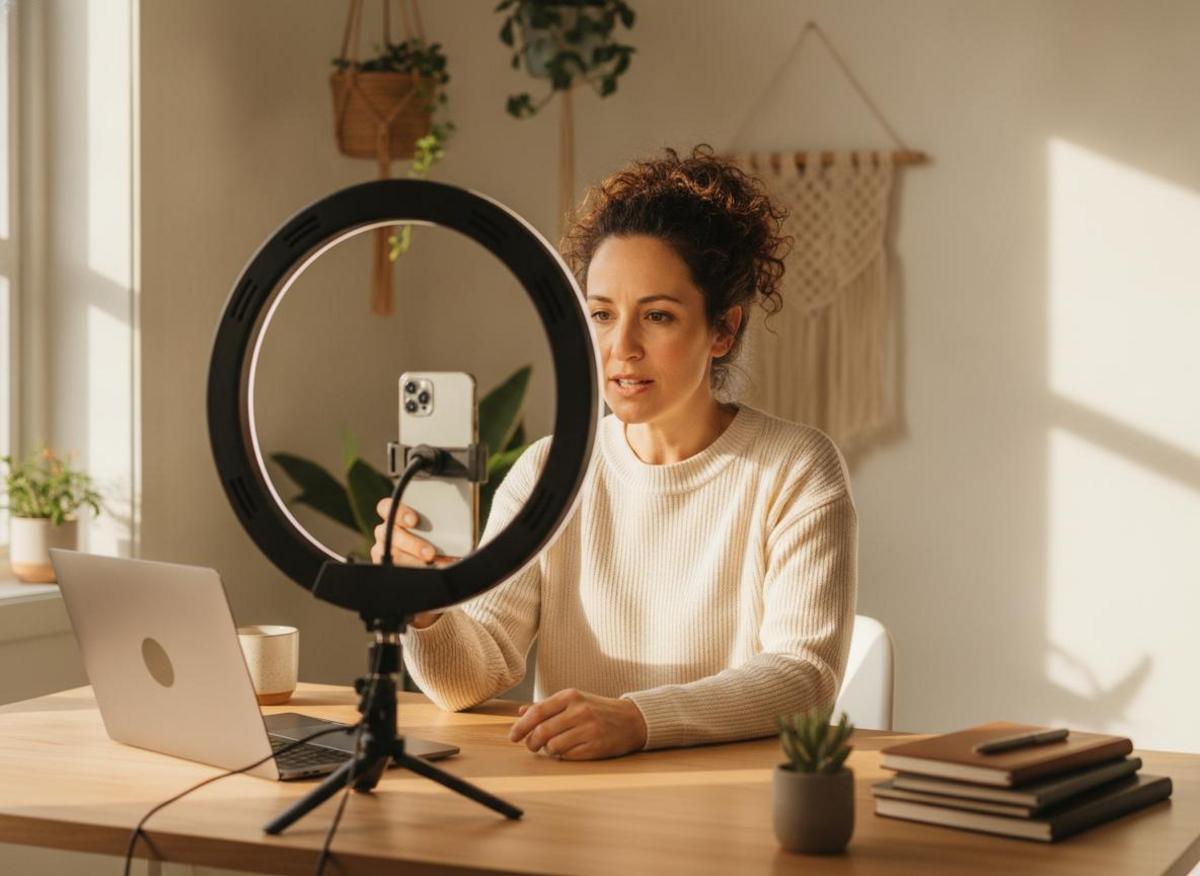
After working with somewhere around forty entrepreneurs over the past two years, I’ve stopped pretending there’s a one-size-fits-all answer to short form video marketing strategy 2026. What I actually use — and what consistently moves the needle for my clients — is a three-video framework built around intent rather than virality. The goal isn’t a million views. The goal is the right two hundred people watching the right video and thinking “this person gets me.” That shift in mindset alone changes everything about how you approach content.
Here’s how the framework breaks down in practice. The first video type I call the “proof of process” — it’s a behind-the-scenes look at how you actually do your work, not a polished highlight reel. Think messy desk, real client problems, genuine thinking out loud. This builds trust faster than any testimonial carousel ever will. The second type is what I call the “hot take” — a short, opinionated stance on something your industry gets wrong. This is where Reels strategy and TikTok for business really diverge from traditional marketing wisdom, because controversy (when it’s rooted in genuine expertise) creates genuine conversation, not just passive scrolling. The third type is the “micro-result” — a tight, specific before-and-after story from a client or your own work. Not vague success. Measurable, concrete, relatable success that a potential client can project themselves into.
What makes this framework hold up across platforms and into late 2026 is the rotation. I tell every client to cycle through these three types rather than chasing whatever video content marketing trend exploded that week. When you have a proof of process video going out, you’re building credibility. When you follow it with a hot take, you’re building personality. When the micro-result drops, you’re building desire. It’s a psychological rhythm that primes an audience to actually reach out rather than just follow and forget. I’ve seen entrepreneurs with under five hundred followers consistently book discovery calls using this exact rotation, which to me is infinitely more valuable than chasing algorithmic lottery tickets.
Platform Choices, Repurposing, and Where to Spend Your Energy

Let me be honest with you: trying to be everywhere at once is the fastest way to burn out and produce mediocre content on every single platform. I learned this the hard way in 2024 when I was posting Reels, TikToks, and YouTube Shorts simultaneously without a coherent reels strategy, and my engagement was embarrassingly flat across the board. The shift that actually moved the needle was picking one primary platform, getting genuinely good there, and then repurposing strategically rather than just cross-posting the same raw clip everywhere. Your short form video marketing strategy 2026 needs to be built around focus, not volume. If your audience skews older or more professional, LinkedIn video and YouTube Shorts are doing serious work right now. If you’re selling directly to consumers or building a personal brand with a younger demographic, TikTok for business still has reach advantages that Instagram simply can’t match organically, despite what the algorithm optimists will tell you about Reels.
Repurposing is where solo entrepreneurs actually win, but only if you’re thoughtful about it. A 60-second video shot vertically for TikTok is not automatically a great Reel — the pacing, hooks, and even the caption culture are different enough that lazy cross-posting tends to underperform. What I do instead is shoot once with repurposing in mind, then adapt the edit and the copy for each destination. That means slightly different text overlays, a different opening hook, sometimes a trimmed version for one platform and a slightly longer cut for another. It adds maybe 20 minutes to my workflow and the results are genuinely incomparable to the copy-paste approach. Video content marketing in 2026 rewards people who understand that each platform has its own language, and audiences can tell when you’re phoning it in.
As for where to spend your energy when you’re resource-constrained — and most of us are — I’d say consistency on one platform beats sporadic perfection on three. The video trends this year are favoring creators who show up regularly with a recognizable point of view over those who occasionally drop a highly produced piece. Algorithms reward retention, and audiences reward familiarity. Pick your lane, own it, and then expand when you have the systems to support it.
Final Thoughts
Getting your short-form video strategy right in 2026 is less about doing more and almost entirely about doing the right things for the right audience on the right platform. I’ve watched so many entrepreneurs burn out chasing every trend, posting daily to three platforms, and wondering why nothing sticks. When I finally narrowed my own focus — one core message, one primary platform, one content rhythm that actually fit my life — everything changed. The views mattered less, but the right people started showing up consistently.
Your short form video marketing strategy 2026 doesn’t need to be complicated to be effective. It needs to be intentional. Start small, study what resonates, and build from there. The entrepreneurs I see winning right now aren’t the ones with the biggest production budgets — they’re the ones who understand their audience better than anyone else and show up for them consistently.
What’s your take on this? I’d love to hear it. 👇