
Ready to turn pins into traffic? In this guide to Keyword Research Made Simple, you’ll uncover easy keyword research steps that supercharge Pinterest SEO. Expect bite-size SEO tips, a practical Pinterest marketing roadmap, and a clear content strategy you can apply today. I’ll show you how to use a keyword research tool or SEO software, and share takeaways from my favorite Pinterest marketing book, SEO planner, and content strategy workbook—so you can find winning phrases, craft irresistible pin titles, and rank faster without the guesswork.
Introduction: Why Keyword Research Matters for Pinterest SEO
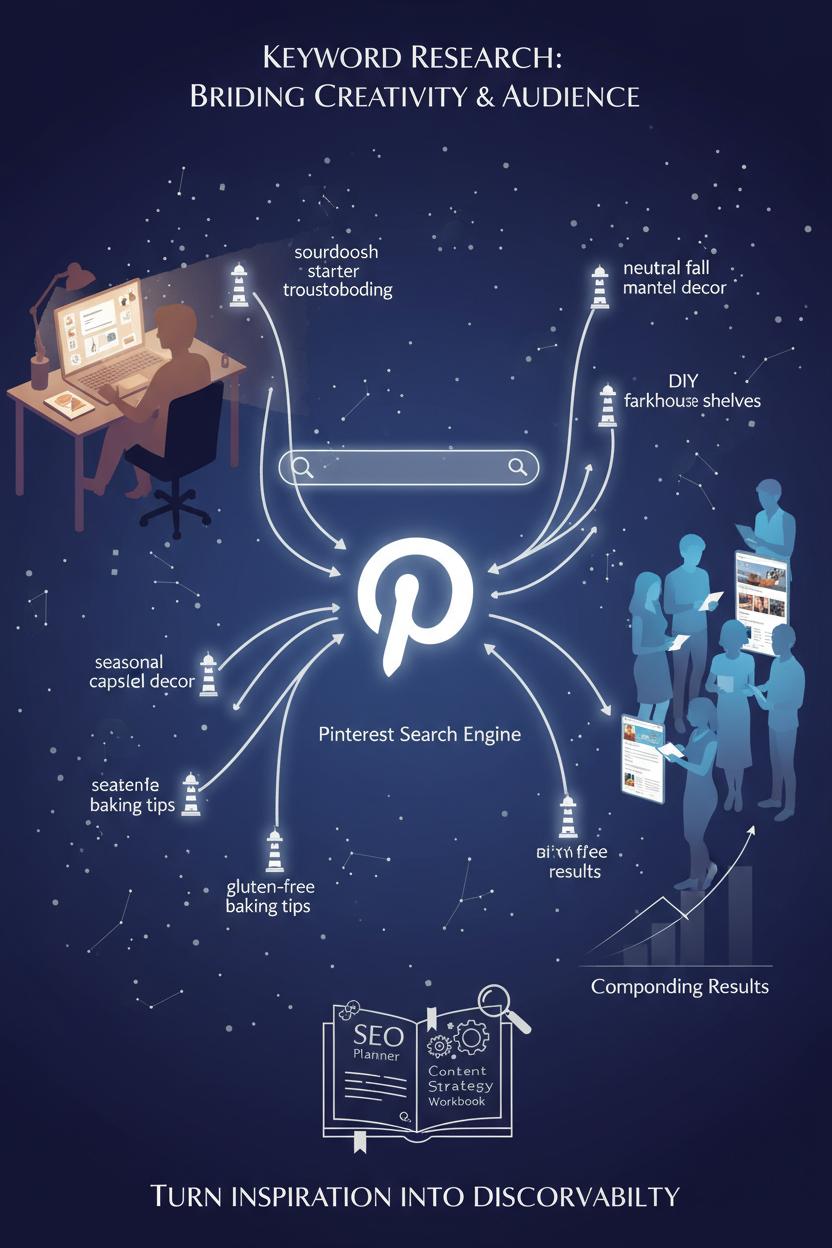
If you’ve ever wondered why some Pins seem to effortlessly climb to the top of search while others fade into the background, the answer is almost always keyword research. Pinterest is a visual search engine, and every title, description, board name, and text overlay you write becomes a tiny lighthouse guiding your ideal pinner to your content. When you understand the exact phrases people type—right down to seasonal trends and long-tail nuances—you’re not just posting pretty graphics; you’re practicing Pinterest SEO with purpose. That alignment helps your Pins surface in search, Related Pins, and the Smart Feed, extending their lifespan long after publish day. In short, keyword research bridges the gap between your creativity and the audience who needs it, turning inspiration into discoverability.
Think of it as learning the language your audience already speaks. A baker might search “sourdough starter troubleshooting,” not just “bread recipes.” A new homeowner might pin “neutral fall mantel decor” instead of “autumn decorations.” These small distinctions shape your content strategy, guiding which ideas to create first, how to frame them, and how to name your boards so the algorithm clearly understands your niche. Start with the Pinterest search bar and Trends to spot real queries, then weave those terms naturally into your Pin titles, descriptions, and overlays—no stuffing, just clarity. Over time, this consistency builds topical authority, helping your Pinterest marketing stand out in crowded categories while keeping your brand voice warm and approachable.
Tools can make the process smoother without overcomplicating it. A simple keyword research tool or lightweight SEO software can validate search interest, while a dog-eared Pinterest marketing book may spark angles you hadn’t considered. Capture ideas in an SEO planner, and map your clusters in a content strategy workbook so you stay focused through seasons and launches. As you move through this guide, you’ll pick up practical SEO tips to keep things streamlined and sustainable—because when your words match your audience’s intent, every Pin works harder for you, quietly compounding results day after day.
The Simple Workflow: Keyword Research Made Easy for Pinners

Think of keyword research on Pinterest like curating a dream board with purpose. Start by picturing your ideal Pinner and jotting the phrases they’d actually type when they’re searching for inspiration or solutions. Then pop those seeds into the Pinterest search bar and follow the autocomplete trail; those suggested phrases are gold for Pinterest SEO because they mirror real search behavior. Click into results and notice the colored guide chips—combine two or three to form long-tail gems that feel natural in your voice. Peek at top-ranking pins and boards to hear the exact language successful creators use in titles, descriptions, and text overlays. Next, open Pinterest Trends to catch seasonal waves early and build simple clusters around them. You’re not chasing hundreds of terms; you’re building tiny keyword families that guide your Pinterest marketing and keep your content strategy intentional.
Now turn research into action. Choose one primary keyword and three to five supporting phrases, then weave them into your board titles and descriptions, pin titles, and the first lines of pin descriptions—always with benefit-forward, human language. Create a batch of fresh images for each idea and vary the text overlay to highlight different long-tail angles. If you like structure, park everything in a simple spreadsheet, an SEO planner, or a content strategy workbook so you can plan weekly pinning without overthinking. Data lovers can sanity-check phrases with a lightweight keyword research tool or broader SEO software, while bookworms might enjoy a Pinterest marketing book for deeper strategy. Quick SEO tips: favor specific, long-tail phrases (“fall capsule wardrobe for teachers” beats “fall outfits”), keep titles clear within the first 50–60 characters, and match the mood of your niche with descriptive adjectives that Pinners actually search. Publish, watch saves and outbound clicks, and circle back every month to refine what’s working. With this cozy, repeatable workflow, your keywords stop living in a doc and start guiding visuals, captions, and boards—making Pinterest SEO feel simple, strategic, and surprisingly fun.
Discover Ideas: Use Pinterest Search, Trends, and Related Keywords

Start by letting Pinterest do the talking for you. Type a broad idea into the search bar—“meal prep,” “boho living room,” “spring nails”—and watch the auto-suggestions bloom beneath. Those phrases are pure keyword research gold because they mirror what Pinners actually type. Click into a promising term and notice the related keywords that appear as tags and in the grid of results; peek at Pin titles, descriptions, and board names to spot recurring phrases and natural variations. Jot down long-tail ideas like “weekly meal prep for beginners,” “boho living room on a budget,” or “pastel spring nails short.” This simple habit fuels Pinterest SEO without guesswork and turns everyday browsing into a practical content strategy you can actually execute.
Next, open Pinterest Trends and compare a few contenders side by side. You’ll see when interest peaks, which phrasing wins, and how seasonality ebbs and flows. Maybe “fall table settings” starts climbing in late August while “Thanksgiving tablescape” surges in November; plan to publish early and repin right as the curve rises. Test synonyms too—“capsule wardrobe” versus “minimalist wardrobe,” “DIY pantry organization” versus “kitchen storage hacks”—and prioritize the term with the steadiest momentum for your niche. These SEO tips help you choose titles and descriptions that resonate now, not last year. If you love pen-and-paper, keep an SEO planner or content strategy workbook nearby to map out themes and pin schedules as you research.
Finally, refine with related keywords. Click into a high-performing Pin and explore “more like this” to uncover adjacent ideas you might have missed, then group keywords by intent: tutorial, checklist, product roundup, before-and-after. That clarity elevates Pinterest marketing because each Pin can target a distinct need while linking back to cohesive boards. If you prefer a little tech backup, a lightweight keyword research tool or SEO software can help validate search volume beyond Pinterest. And when you want deeper strategy, a practical Pinterest marketing book can spark fresh angles you can test on Trends next week. Keep your list evolving, keep your phrasing natural, and keep publishing. With a steady rhythm of search-led ideas, your Pinterest SEO works quietly in the background—bringing the right people to your content at exactly the right moment.
Picking a Keyword Research Tool That Fits Your Pinterest Strategy

When you’re choosing a keyword research tool for Pinterest, think in mood boards and seasons, not just spreadsheets and search volume. Pinterest is a discovery engine where people dream, plan, and collect, so the best tools help you surface phrases that match that dreamy intent and timeline. Start by asking where the data comes from: does it tap Pinterest autosuggest and trends, or only traditional web search? A tool that can spot long-tail ideas like “moody fall tablescape” or “small balcony herb garden” will move the needle on Pinterest SEO far more than generic head terms. Pair that with a quick scan of Pinterest Trends to validate seasonality, then use your tool to cluster related phrases for board names, pin titles, and descriptions so your Pinterest marketing feels cohesive and clickable.
Look for features that make execution easy: saved keyword lists by board, intent tags (DIY, inspo, shopping), and templates that help you build titles and descriptions without sounding robotic. Bonus points if your keyword research tool exports clean CSVs you can drop into your SEO planner or content calendar, and if it plays nicely with any SEO software you already use. I love tools that generate multiple caption variants so you can A/B test the first 100 characters, and ones that surface “adjacent” ideas to fuel a broader content strategy—think turning one high-potential idea pin into a mini series. If you’re a tactile planner, pairing your digital stack with a Pinterest marketing book or a content strategy workbook can give you swipe-worthy prompts, while a paper or digital SEO planner keeps your posting rhythm on point. Little SEO tips, like noting lead times (start pinning holiday ideas 8–10 weeks early), become effortless when your tool flags seasonal peaks automatically.
Budget-wise, test before you commit. Free options are great for validation; entry-level paid plans usually unlock trend curves, competitor peeks, and more generous exports. If you collaborate, make sure the workspace supports shared boards and comments, and if you serve niche or local audiences, confirm the tool handles regional language nuances. Give any setup a one-week trial: collect keywords, craft pins, and watch saves and outbound clicks. The right tool feels like a creative partner—one that turns keyword research into a rhythm you can actually stick to, and that keeps your Pinterest SEO humming behind every beautiful pin.
Validate Your List with SEO Software and Pin Performance Data

You’ve built a beautiful list of phrases from your keyword research—now it’s time to sanity-check those ideas with data. Open your favorite keyword research tool or SEO software and drop in your top contenders to see how demand, trend lines, and competition look. Pair that with Pinterest Trends to confirm seasonality, because timing is everything on the platform. Compare similar phrases for intent—think fall table centerpiece ideas versus Thanksgiving tablescape DIY—and notice how long-tail keywords with descriptive modifiers often match how Pinners actually search. Highlight the keepers with solid volume, rising interest, and a clear fit for your content. This little calibration step keeps your Pinterest SEO focused and gives you confidence that your next batch of pins will land with the right audience.
Now validate those picks against your own pin performance. Create a small test set of fresh pins for one URL, each featuring a different focus keyword in the title, description, and on-image text. Pin them to tightly themed boards and let them run for 7–14 days. Watch impressions, saves, and outbound clicks; saves tell you a keyword aligned with inspiration, while a healthy click-through rate shows intent to learn or buy. If a phrase pulls strong impressions and saves, it’s likely signaling relevance to the algorithm, and a solid CTR hints at conversion potential. Keep iterating visuals, but don’t forget copy—tiny tweaks in the first 40–60 characters can move mountains. Promote winners across related boards and use runner-up terms as secondary keywords, board descriptions, and alt text.
Fold what you learn back into your content strategy. Track results in an SEO planner or content strategy workbook so patterns are easy to spot, and if you like deeper frameworks, a Pinterest marketing book can help you refine testing routines. Revisit your list monthly, sunset duds, and update blog headlines and meta with validated phrases. Spin up new pins for seasonal climbers ahead of the curve—these SEO tips make your Pinterest marketing feel calm, consistent, and compound. When you’re ready to expand, return to your keyword research stack in your keyword research tool or SEO software, brainstorm adjacent terms, and repeat the loop. It’s a gentle, data-backed rhythm that keeps your feed stunning and your traffic steadily growing.
Map Keywords to Boards, Pins, and Profiles for Stronger Pinterest SEO
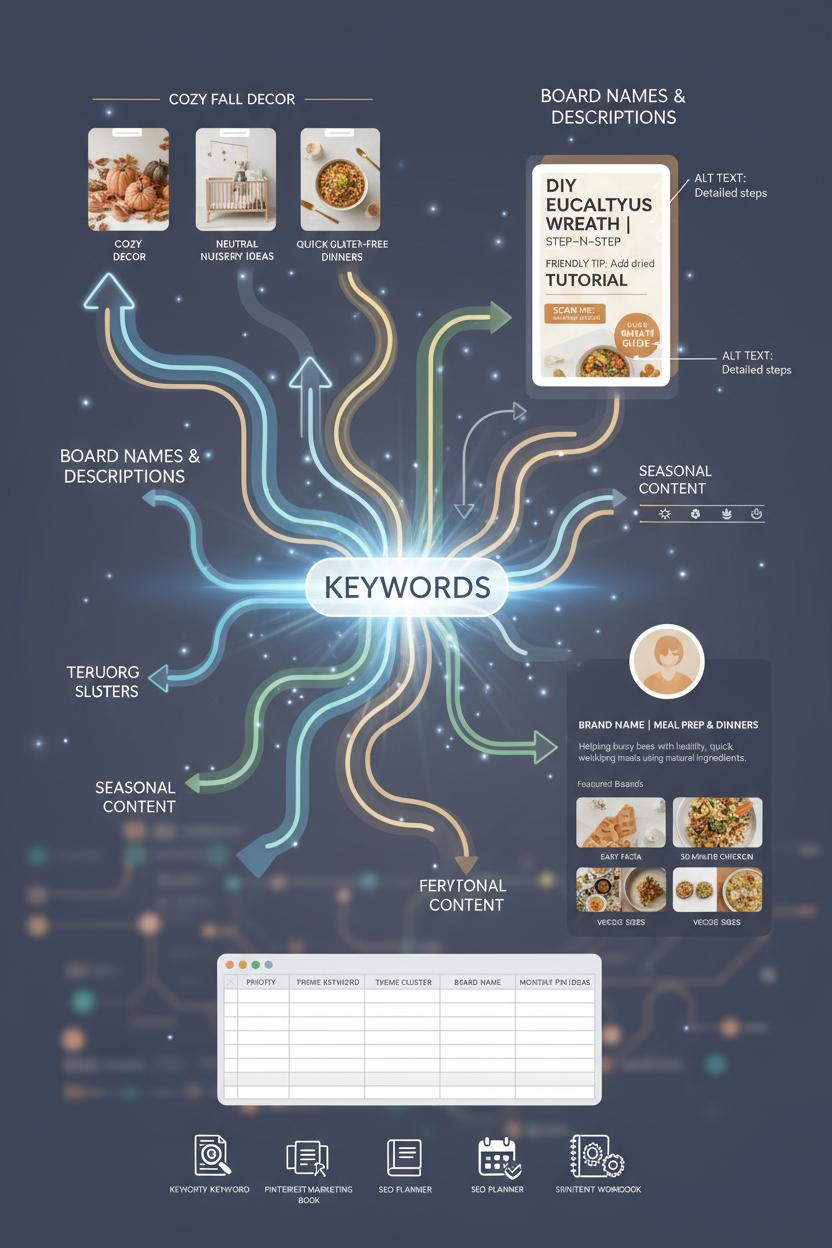
Think of your keywords like little signposts that guide pinners to the exact corner of your world they’re hoping to find. Start with keyword research, then cluster related phrases into themes (think “cozy fall decor,” “neutral nursery ideas,” or “quick gluten-free dinners”) and assign each cluster to a board. Name your boards with the clearest, most searched phrase, not a cute inside joke. In the board description, write two or three warm sentences using natural variations and long-tail terms—this is Pinterest SEO gold because it helps the algorithm understand what lives there. If it fits your content strategy, use board sections to separate subtopics, and keep saving relevant pins to signal freshness.
Pins are where your keywords work hardest. Treat every pin as a mini landing page: a compelling title with your primary phrase upfront, a description that reads like a friendly tip with a secondary keyword, and on-image text that reinforces the topic for scannability. Add alt text that describes the image and intent (“step-by-step DIY eucalyptus wreath tutorial”), and keep your visuals consistent so Pinterest recognizes the niche you’re building. Think seasonally—repurpose a core keyword into different angles across the year—and weave in gentle calls to action. These simple SEO tips help each pin surface for more searches, more often.
Don’t forget your profile. Your display name can include one or two core phrases (for example, Brand Name | Meal Prep & Weeknight Dinners), and your bio should plainly state who you help and how, using a couple of natural keywords. Feature your most important boards first and keep your aesthetics cohesive so your Pinterest marketing signals are crystal clear. To make mapping painless, create a simple spreadsheet: list your priority keywords, group them by theme, match each theme to a board, then plan monthly pin ideas beneath each. A reliable keyword research tool or lightweight SEO software can uncover long-tail gems; a Pinterest marketing book is great for tactic inspiration; an SEO planner keeps you consistent; and a content strategy workbook helps you map ideas to seasons and launches. Tie it all together with a repeatable workflow, and your keywords will quietly work overtime for stronger Pinterest SEO.
Content Strategy Essentials: Clusters, Categories, and Seasonal Planning

Think of clusters as the cozy neighborhoods of your Pinterest account—groups of closely related ideas that make it easier for the algorithm and your audience to know exactly what you’re about. Start with keyword research to find the phrases your people are actually searching for, then build clusters around those themes. If “meal prep” is your pillar, your cluster might include “quick lunches,” “freezer-friendly dinners,” and “budget grocery lists.” Each cluster becomes a mini ecosystem of boards, pins, and idea pins that link together, use consistent phrasing, and naturally boost Pinterest SEO. Categories are the labels on those neighborhoods: they’re the broad umbrellas that shape your board structure and keep your content strategy tidy. Pick three to five core categories aligned with your business goals, then map your clusters underneath them so every new pin has a clear home and a clear purpose.
Organizing this doesn’t have to be complicated. Use a simple spreadsheet or pull out an SEO planner where you list your categories, clusters, and the keywords you’ll target in titles, descriptions, and board copy. A reliable keyword research tool (or even lightweight SEO software) can validate search interest so you’re not guessing. If you like print-and-plan, a content strategy workbook helps you outline pillar topics and subtopics in one place, and a good Pinterest marketing book can offer platform-specific nuances—like how many images to test per idea or how to stagger fresh pins. The goal is to create a rhythm: every week, choose a cluster, draft a batch of pins around it, and publish consistently so the algorithm sees steady signals.
Finally, weave in seasonal planning so your clusters bloom at the right time. On Pinterest, people plan early—pin seasonal content 6–8 weeks ahead of the moment it’s needed. That means fall decor in late summer, holiday baking before Halloween, and wedding inspiration while it’s still chilly. Balance evergreen content with timely spikes, and refresh your best seasonal pins each year with updated images and tightened descriptions. Simple SEO tips go a long way here: match your pin titles to search terms, keep descriptions conversational but keyword-rich, and align boards to categories your audience already browses. Track results, retire what’s stale, and double down on pins that convert—Pinterest marketing loves patterns, and a clear, cluster-based content strategy creates them.
Plan Your Week: Build a Pinterest Marketing SEO Planner You’ll Use

Think of your week like a mood board for momentum. Start by choosing a single theme—spring entryway refresh, weeknight sheet-pan dinners, minimalist home office—then map it to three to five boards you want to nurture. In your notebook or digital SEO planner, create a simple grid: theme, boards, target phrases, pin ideas, and link destinations. Do quick keyword research first: pop your theme into Pinterest search, scan the autosuggestions, open a few top pins, and note the repeating phrases and modifiers. If you love tools, a lightweight keyword research tool or even beginner-friendly SEO software can help you spot long-tail phrases and seasonal trends you might miss. The goal is a calm, repeatable workflow that nudges you toward better Pinterest SEO without the scramble.
Now batch your tasks. On Monday, outline your content strategy: which blog post, product, or lead magnet are you supporting, and how do your boards ladder back to it? On Tuesday, write titles and descriptions using one core phrase and one variation; keep it natural, like you’re chatting with your best friend. Wednesday is for design—two to three pin styles per idea, keeping brand fonts and colors consistent so your grid looks cohesive. Thursday, schedule pins and story pins, spacing them across boards. Friday, review analytics and jot down tiny SEO tips you learned: which adjectives get more saves, which boards respond to “how to” versus “ideas,” which seasonal hooks are waking up. If you need inspiration or structure, flip through a Pinterest marketing book or a content strategy workbook to spark angles you can test next week.
Keep everything in one place—your planner, templates, and notes—so testing becomes effortless. Use a color code for themes, a star for winning phrases, and a heart for pins with strong outbound clicks. Rotate fresh images for the same URL and tweak descriptions based on performance. Over time, your planner becomes a living library of what works in Pinterest marketing for your niche, making keyword research feel less like homework and more like styling a lookbook: intentional, beautiful, and built to convert.
Repurpose and Scale: Turn Blogs into Pins with a Content Strategy Workbook
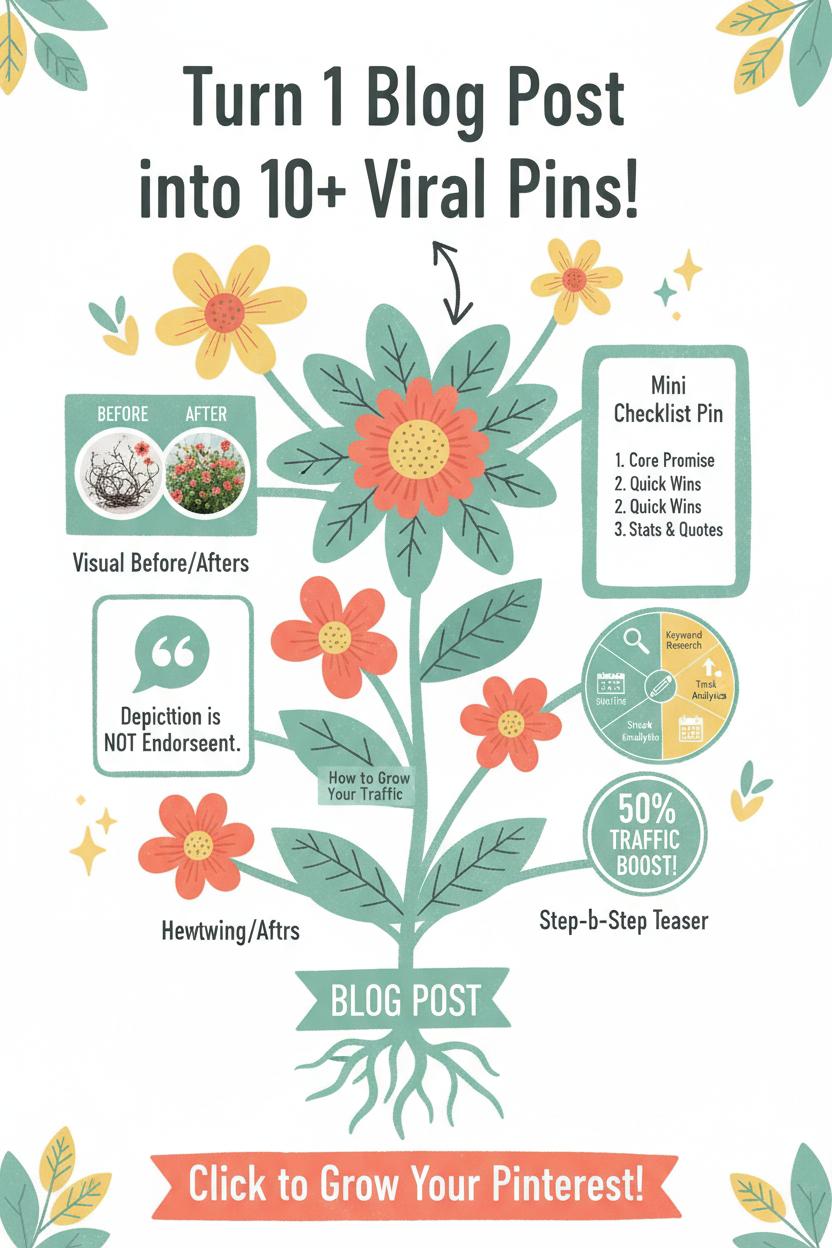
You’ve already done the heavy lifting by writing a helpful blog post—now let it work twice as hard on Pinterest. Open a content strategy workbook and map one blog into a cluster of pins, each with a slightly different angle. Start by highlighting the post’s core promise, then list the problems it solves, quick wins, stats, and quotable lines. Do a round of keyword research to find the primary phrase and a few long-tail variations your audience is actually typing into search. If you like numbers, a simple keyword research tool and lightweight SEO software can help you gauge interest and spot seasonal spikes. This is Pinterest SEO in action: pairing what you want to say with what people are already looking for.
From there, sketch out 5–10 pin concepts. Think: a bold “before/after” result, a step-by-step teaser, a myth-busting quote, a mini checklist, or a stat-driven pin. Write multiple headlines using your primary keyword naturally, then add one supporting keyword in the description with a warm call to action. Keep your visuals consistent—brand colors, legible fonts, and clean text overlays—so your pin feels like a friendly invitation, not a billboard. If you love having everything in one place, keep an SEO planner beside you to log pin titles, descriptions, boards, and publish dates. And if you want a creativity nudge, skimming a Pinterest marketing book can spark new angles and design ideas that align with your content strategy.
Finally, scale with intention. Schedule pins over a few weeks so they don’t compete with each other, and pin to the most relevant boards first. A/B test two covers or hooks and track saves, clicks, and outbound traffic; your content strategy workbook is the perfect home for those notes, so you can repeat what works without guessing. Revisit analytics monthly, refresh the best performers with a new image or headline, and retire what doesn’t move the needle. Sprinkle in seasonal versions when timing makes sense, and bundle related posts into mini series for momentum. These tiny, repeatable steps feel like cozy, sustainable Pinterest marketing—and they add up. Keep it simple, follow the data, and let these SEO tips guide every design and caption until each blog blossoms into a whole garden of pins.
Learn from the Pros: What a Top Pinterest Marketing Book Can Teach You
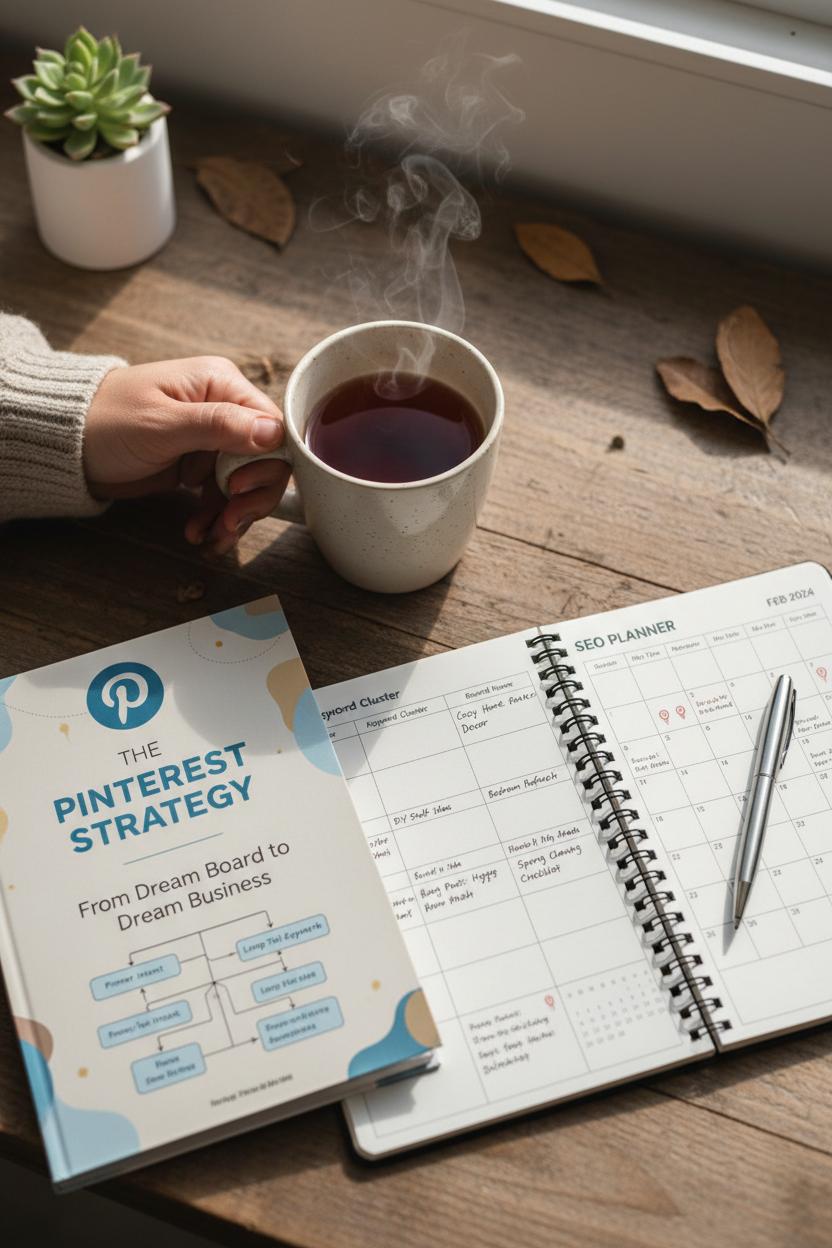
If you’ve ever flipped through a truly great Pinterest marketing book, you know it reads like a cozy roadmap for turning scattered ideas into a confident content strategy. The pros make keyword research feel intuitive by starting with pinner intent—what someone is dreaming about, planning for, or ready to buy—and then translating that into long-tail phrases that fit naturally into your pin titles, descriptions, and board names. They’ll nudge you to treat Pinterest SEO like a rhythm: peek at Pinterest Trends, play with autocomplete, and save your discoveries in an SEO planner so your seasonal posts land right when interest is peaking. You’ll learn to build boards around themes you want to rank for, to sprinkle related terms without stuffing, and to add keyword-rich text overlays so your visuals whisper the same story your captions tell. And while you can go far with native tools, a simple keyword research tool or lightweight SEO software can help you uncover variations you didn’t know people were searching for, making your next batch of pins feel surprisingly easy to brainstorm.
The best SEO tips from these pros also focus on consistency and measurement, not guesswork. They’ll show you how to organize ideas into clusters, then map a month of pins in a content strategy workbook, repurposing one blog post into multiple pin angles, Idea Pins, and carousels without feeling repetitive. You’ll be encouraged to test headlines, swap out images, and track what actually moves the needle—saves, clicks, and steady impressions from search—so each new pin is smarter than the last. You’ll also notice how they emphasize small, sustainable habits: save to the most relevant board first, align every visual with your primary keyword, and revisit older pins to refresh descriptions as trends evolve. That blend of art and structure is the heart of Pinterest marketing, and it’s why even a few chapters can transform your workflow. With a cup of tea, a clean SEO planner, and a favorite Pinterest marketing book by your side, you’ll find that keyword research becomes less of a chore and more of a creative ritual, one that slowly but surely lifts your Pinterest SEO and brings the right people to your content.
Measure What Matters: Analytics, Seasonality, and A/B Testing for Pinterest SEO

Analytics is where your Pinterest SEO starts to hum. Track the handful of metrics that tell a story: impressions reveal discovery, closeups signal curiosity, saves indicate future intent, and outbound clicks prove your Pin did its job. Watch your save rate and click-through rate together—high saves with low clicks means your creative is inspirational but maybe the CTA or link context needs love; high clicks with low saves might suggest the Pin solves an immediate need but isn’t “keep-worthy.” Build simple benchmarks with 30- and 90-day rolling averages so seasonality doesn’t spook you. Tag every link with UTM parameters to connect Pin performance to onsite behavior, and segment by board and format so you can spot where your keyword research and creative are actually moving the needle. If you’re a tools person, a keyword research tool or SEO software can speed up discovery and validation without guesswork.
Seasonality is Pinterest’s secret current, and your content strategy should surf it early. People plan ahead here, so publish seasonal Pins 6–10 weeks before the moment, then refresh with new images as interest rises. Map evergreen pillars (like “meal prep” or “small entryway ideas”) alongside timely drops (holidays, back-to-school, wedding season), and note repeating peaks. A lightweight SEO planner or content strategy workbook is perfect for plotting keywords, Pin dates, and follow-up ideas you’ll re-use next year. Revisit boards annually: prune underperformers, merge duplicates, and retitle with fresh, keyword-rich phrasing that reflects how Pinners are currently searching. Pair this with trend listening and you’ll catch the swell instead of paddling after it.
A/B testing keeps your SEO tips honest. Test one variable at a time: two titles with different primary keywords, two descriptions (benefit-first vs. feature-first), or two creatives (warm color palette vs. cool, script font vs. sans-serif, product close-up vs. lifestyle). Run tests for at least two weeks or until each version hits a reasonable impression threshold, then choose winners based on saves and outbound clicks, not just impressions. Repeat the winner on a second relevant board to confirm it wasn’t a fluke. Keep a running log—bookworms might love a Pinterest marketing book for deeper tactics—and you’ll turn experiments into a repeatable Pinterest marketing playbook.
Final Checklist: Quick SEO Tips to Boost Pinterest Marketing Today

Before you hit publish on that pretty new Pin, run through this quick, feel-good checklist to make sure your keyword research is actually doing the heavy lifting. Start by confirming the search intent you’re targeting, then pull a handful of long-tail phrases from Pinterest search and Trends—think natural, shopper-friendly wording that your ideal pinner would type. Weave your primary phrase into the Pin title, the first sentence of the description, your board name, and the image alt text, keeping it conversational and skimmable. Add two to three supporting phrases without stuffing. Design-wise, use a clear 2:3 image with high-contrast text overlay that echoes your keywords, and add a soft call-to-action that promises value. Link to a landing page that repeats the same language for strong Pinterest SEO continuity. Save the Pin to the most relevant board first, then to closely related boards over time to avoid duplication fatigue. If you need a little backup, a simple keyword research tool or beginner-friendly SEO software from Amazon can help you validate volume and spot related terms quickly.
Next, zoom out and smooth the path for discovery with a tiny burst of systems. Audit your boards so each one is a themed home for a cluster of keywords and aligns with your content strategy. Batch-create fresh images for top performers and rotate formats—static, video, and Idea Pins—to catch different browsing moods. Plan seasonally and work backwards: your spring content should start pinning in winter, and a trusty paper or digital SEO planner makes that easy. Track what converts with UTM links and Pinterest Analytics; double down on pins that consistently bring saves and outbound clicks. Keep your site fast and mobile-friendly, turn on Rich Pins, and make sure the page headline mirrors the Pin title for a clean relevance signal. If you love learning by example, a Pinterest marketing book can spark ideas, while a content strategy workbook turns brainstorms into a repeatable workflow. Keep these SEO tips close, update them monthly, and watch your Pinterest marketing quietly grow compound interest—one well-optimized Pin at a time.
Conclusion
Here’s your cozy wrap-up: keep keyword research simple, let the search bar and Trends guide you, and weave those phrases into boards, titles, descriptions, and pin text. With these SEO tips, your Pinterest SEO gets stronger pin by pin. Batch ideas, design save-worthy graphics, and post seasonally early—then review analytics and refine your content strategy. Small, consistent tweaks fuel effective Pinterest marketing. Brew a warm drink, brainstorm a few long-tail gems, and start pinning with purpose. You’ve got this—your next scroll-stopping board is only a keyword away.