
Save this 5-Step Content Creation Workflow to plan smarter, shoot faster, and publish consistently. Inside: a simple content strategy, practical creator tips, and a repeatable system for batching content that boosts your social media marketing without burnout. Learn how to brainstorm, outline, prep assets, film with a ring light + video lighting kit, and record crisp audio with a USB microphone. Set up your smartphone tripod or desk phone stand, then edit and schedule like a pro. Perfect for busy creators who want clarity, momentum, and results—pin now, implement today!
Step 1: Map Your Content Strategy for Efficient Content Creation
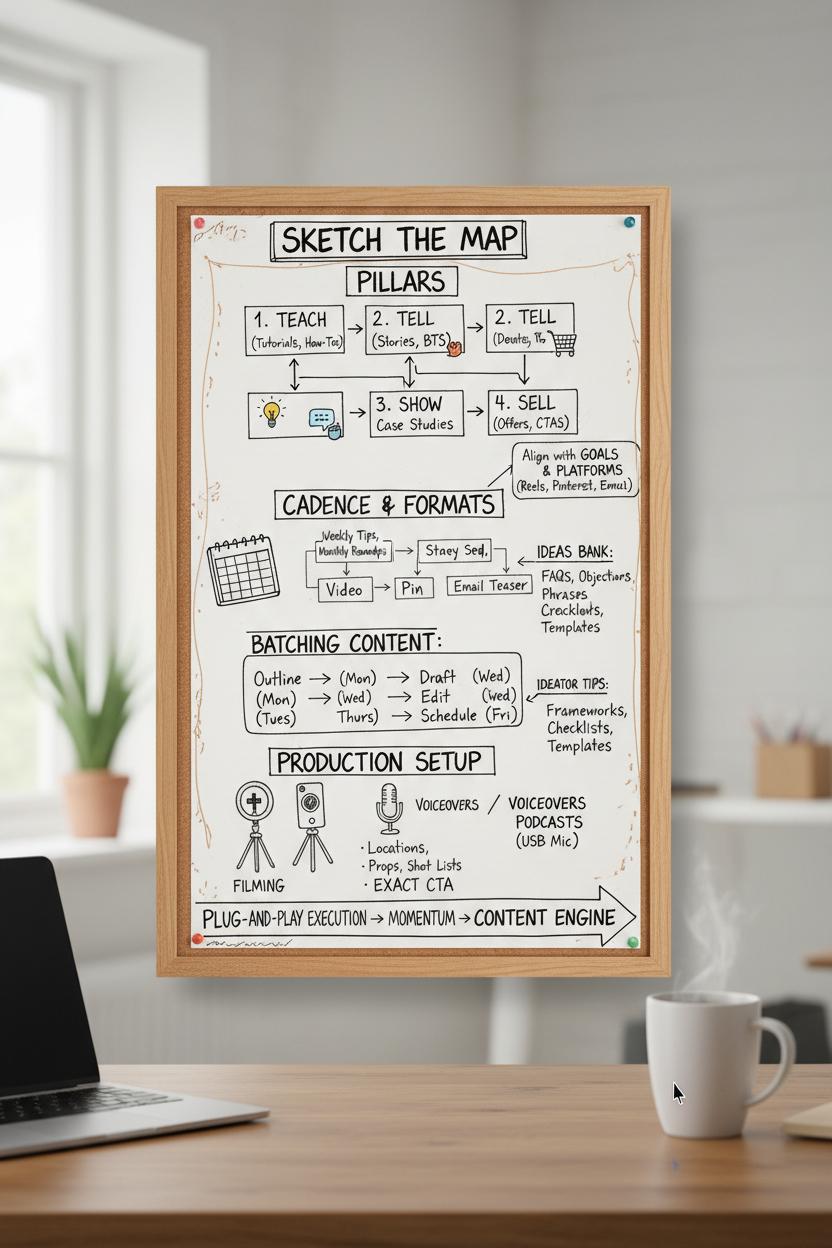
Before you ever hit record or open a blank doc, sketch the map. Start by naming your three to five content pillars—the repeating themes that support your brand story and make content creation feel calm and intentional. Think: Teach (tutorials and how-tos), Tell (personal stories and behind-the-scenes), Show (product demos or case studies), and Sell (clear offers). Under each pillar, brainstorm series you can rinse and repeat—weekly tips, monthly roundups, seasonal spotlights—so you’re never staring at a blinking cursor. Align those pillars with your goals and platforms: what serves your audience best on Reels, what performs on Pinterest, what converts on email. This is the heart of your content strategy, and it’s what keeps social media marketing sustainable instead of scattershot.
Next, choose a cadence you can actually keep. Assign themes to days or weeks, then plan one hero idea per pillar and list all the formats you’ll spin from it: a video, a carousel, a story sequence, a pin, an email teaser. This is where batching content becomes your best friend—outline on Monday, draft on Tuesday, film on Wednesday, edit on Thursday, schedule on Friday. Keep an ideas bank in your notes app with audience FAQs, objections, and phrases your people use; these are gold for captions and hooks. Sprinkle in creator tips you can revisit often—frameworks, checklists, and swipeable templates—because repeatable content is shareable content.
Lastly, set the scene for smooth production. If you’ll be filming, note your setup right in the plan: a ring light or full video lighting kit for consistent glow, a smartphone tripod for hands-free framing, and a desk phone stand for quick B-roll on your workspace. If you record voiceovers or podcast clips, add a USB microphone to your checklist so your sound matches your visuals. Jot down locations, props, and shot lists, plus the exact call to action you’ll use for each piece. With your map in place, creation day becomes plug-and-play—you’re not guessing, you’re executing. That clarity builds momentum, and momentum is what turns a few good posts into a content engine that works while you work.
Step 2: Plan Topics and Outlines — Creator Tips for Idea Pipelines and Calendars
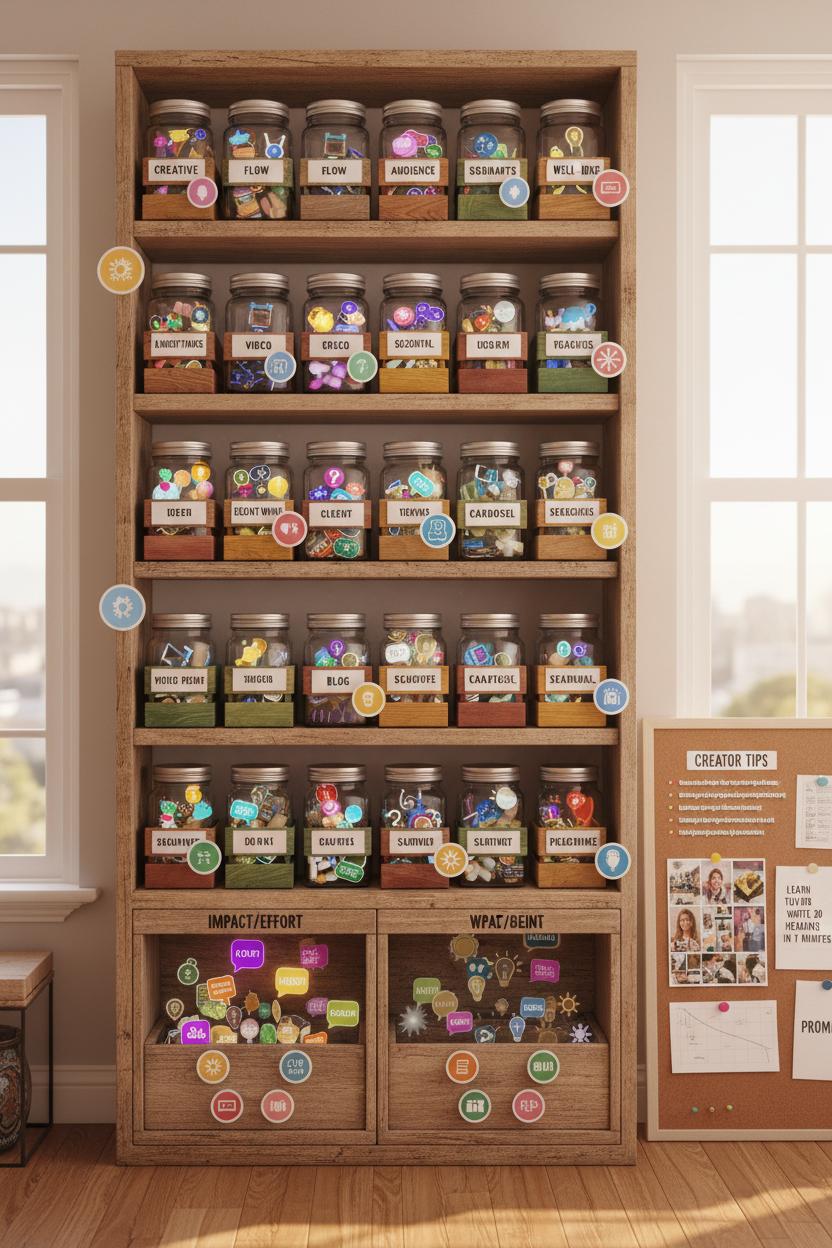
Now that your ideas are simmering, turn them into an easy-flow pipeline that feeds your calendar on autopilot. Start by naming your content strategy pillars—the 3–5 themes you want to be known for—and drop every spark into an “idea pantry”: questions from DMs, phrases your clients use, seasonal moments, and keywords from your social media marketing research. Tag ideas by pillar, format, and season, and give each a quick score for impact and effort so the best ones float to the top when you’re tight on time. Creator tips that help: keep a running hook library, save example posts that made you stop scrolling, and write down a one-sentence promise for each idea so you can immediately see the value. This is where content creation becomes less guessing, more guiding.
Translate that pantry into a calendar with gentle structure and plenty of breathing room. Choose a monthly theme, slot in weekly “episodes” for each pillar, and map the formats you’ll use across platforms. For every idea, sketch a lightweight outline: hook, problem, solution, proof or story, and a clear call to action. If you plan to repurpose, add notes for how the same idea becomes a short video, a carousel, and an email. Timebox outlining into cozy 25-minute sprints, and color-code status so you know what’s drafted, approved, and ready to schedule. Batching content starts here—outline three similar posts in one sitting so your brain stays in the same lane and your calendar fills in satisfying, consistent waves.
Finally, pair outlines with production notes to save future-you so much stress. List any visuals you’ll need, plus simple gear reminders right in the doc: ring light or video lighting kit for moody days, smartphone tripod or desk phone stand for overhead shots, and a USB microphone if audio matters. Note locations, B-roll moments, and a two-line script per scene so filming feels like paint-by-numbers. When the outlines look snackable, drop them into your scheduler with publish dates, captions, alt text ideas, and a short hashtag set. You’ll feel the shift: your pipeline feeds your calendar, your calendar feeds your creativity, and your content creation starts to look and feel like a rhythm you can actually keep.
Step 5: Edit, Schedule, and Distribute — Social Media Marketing and Repurposing
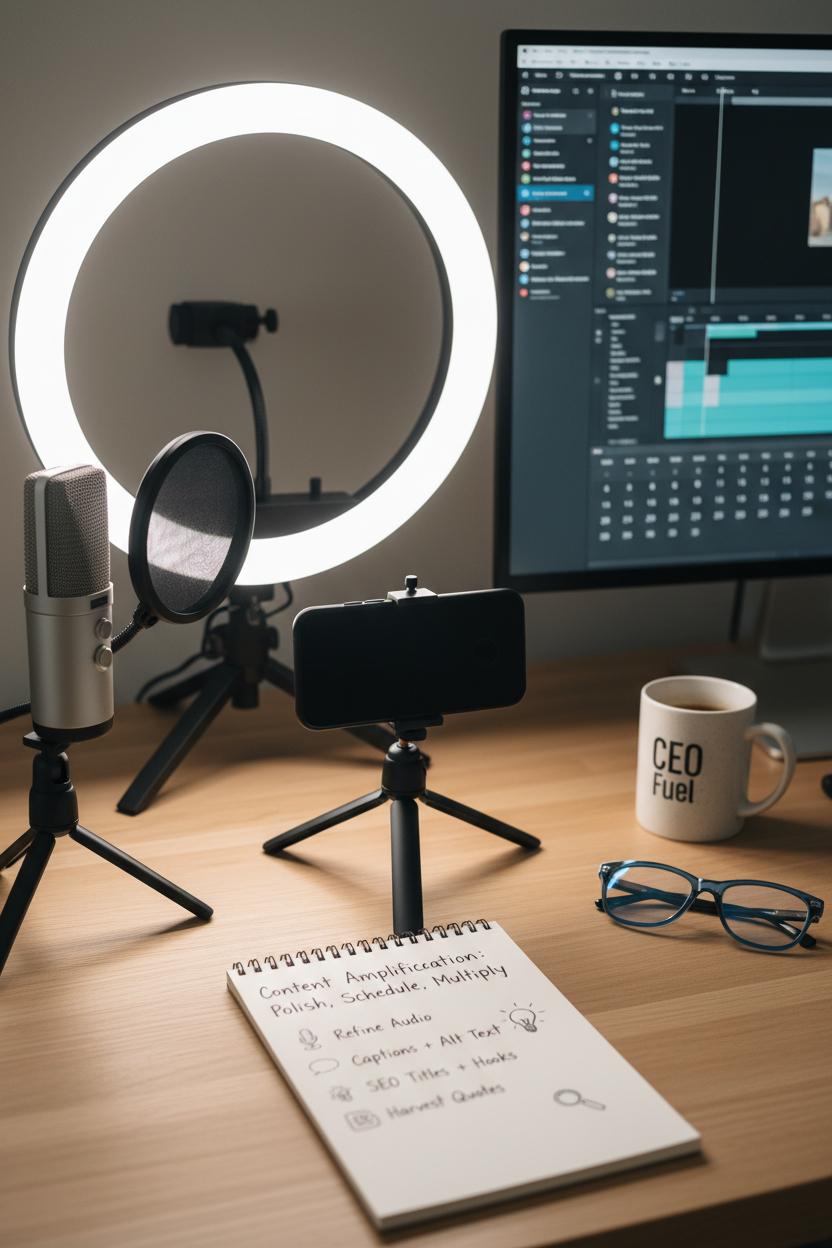
Time to polish and push. Start with a gentle edit pass that trims filler, sharpens hooks, and highlights the transformation your audience will get. Clean up your audio, add captions and on-screen text for silent scrollers, and write alt text that’s descriptive and keyword-aware. Pull a transcript to harvest quotes, stats, and pull lines you can reuse later. Craft titles and descriptions that mirror your audience’s search behavior and your content strategy—think problem + promise + a tiny curiosity gap. If you need quick pick-up shots or voiceovers, a simple setup works: record with a USB microphone for crisp narration, prop your phone on a desk phone stand or smartphone tripod, and turn on a ring light or video lighting kit to keep everything bright and cohesive. Little upgrades like that make your content creation process feel professional without slowing you down.
Next, schedule like a CEO. Set a weekly rhythm and batch related tasks—writing captions in one sitting, then slicing clips in another—so batching content becomes your secret time-saver. Load posts into your scheduler with platform-native tweaks: shorter hooks for Reels and TikTok, keyword-rich pin titles for Pinterest, and a first comment set aside for hashtags where it makes sense. Save templates for recurring series, build a CTA bank, and track UTM links so you can see which platforms actually convert. Map each post to a content pillar so distribution supports your bigger content strategy, not just today’s to-do list. A shared calendar (or even a color-coded spreadsheet) keeps everything visible, from publish dates to repurpose ideas waiting in the wings.
Finally, let one idea travel. Turn the main video into three short clips, a step-by-step carousel, a Pinterest Idea Pin, a LinkedIn summary, and an email teaser that drives back to your hub. Spin quotes into graphics, bundle FAQs into a Story sequence, and stitch a quick “mistakes to avoid” add-on for extra reach—these creator tips keep your pipeline full without reinventing the wheel. Don’t forget social media marketing basics: post when your audience is active, pin top performers, and reshare evergreen pieces seasonally. Hit publish, then circle back to comments and DMs within the first hour; that warm, timely engagement compounds distribution and keeps your brand feeling human and close-to-home.
Conclusion
That’s your 5-step content creation workflow—simple, repeatable, and totally cozy. Map your content strategy, brainstorm smart, batch your assets, schedule with intention, and review what works. With these creator tips, social media marketing feels lighter and more intentional. Pour a coffee, turn on your favorite playlist, and start batching content you’ll be proud to post. Save this guide for your next planning day, pin it for later, and share with a fellow creator. You’ve got this—steady steps, consistent results, and more breathing room in your week.