
Ready to turn scrollers into shoppers? This Pinterest Ads Playbook shows you how to nail targeting, set a smart budget, and scale with confidence using Pinterest ads. We’ll demystify Pinterest advertising, from eye-catching promoted pins to a repeatable Pinterest marketing system and a clear Pinterest ad strategy that grows every month. Grab your digital marketing planner, plug in our social media templates, and map campaigns to your content calendar—then watch results stack up. Perfect for creators and brands who want profitable pins, not guesswork.
How Pinterest Advertising Works: Auction, Relevance, and Intent
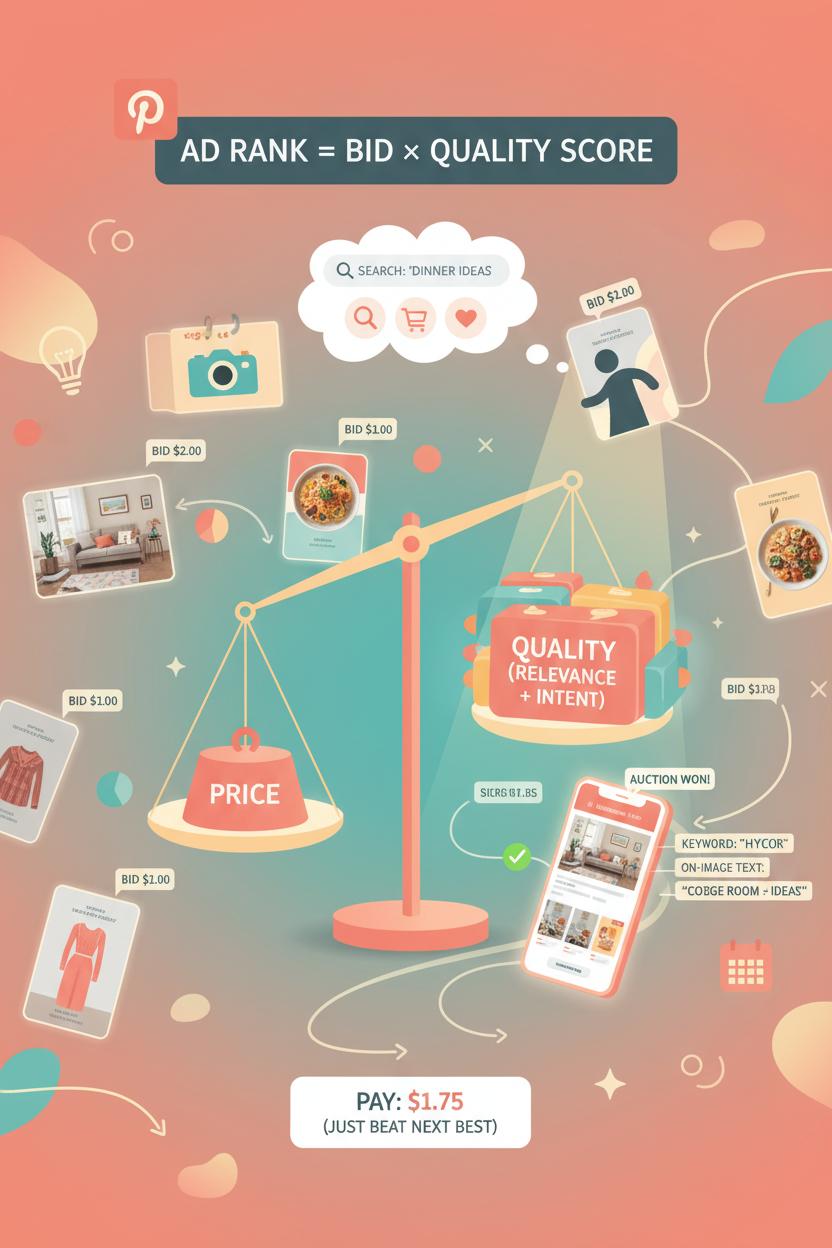
On Pinterest, every scroll triggers a quiet little auction where your promoted pins vie for attention. It’s not just the highest bid that wins; Pinterest advertising weighs your bid alongside how relevant and engaging your ad is predicted to be for that specific person in that specific moment. Think of it as an “ad rank” that blends price and quality. That means a smart Pinterest ad strategy can outshine a bigger budget when your creative, keywords, and landing page line up beautifully. You won’t always pay your full bid either; you typically pay just enough to beat the next best ad in the auction, which is why efficient bidding plus strong creative can drive surprisingly affordable results with Pinterest ads.
Relevance is the heartbeat of Pinterest marketing. Pinterest is visual search at its coziest: people are collecting ideas, comparing looks, saving recipes, mapping dream rooms. When your pin looks exactly like the solution they hoped to find, the platform rewards you with reach. Build relevance by aligning keywords, interests, and creative. Write keyword-rich titles and descriptions that mirror what a Pinner might type, and use clear on-image text that sets expectations. Keep your boards well organized and your landing page a seamless continuation of the pin promise. If you’re running promoted pins for products, add shopping-friendly imagery, prices, and product tags so the “I love this” moment turns into “I bought this.” Relevance signals compound—good pin performance today helps tomorrow’s auctions.
Intent is where Pinterest shines. People come here early to plan and often return ready to act, so match formats and targeting to their stage. Use search campaigns to capture high-intent queries and browse placements to spark discovery. Test video or collection formats for richer storytelling, and let Shopping placements meet decisive shoppers where they’re ready. Map this journey in a content calendar, and keep your creative fresh with social media templates so seasonal ideas never miss their moment. A digital marketing planner can help you pace budgets around peaks, while a practical Pinterest ads book or even a quick marketing course can deepen your foundations. The magic happens when your message, their mood, and the moment align—an auction won by relevance and intent as much as by bid.
Promoted Pins 101: Formats, Objectives, and Placements
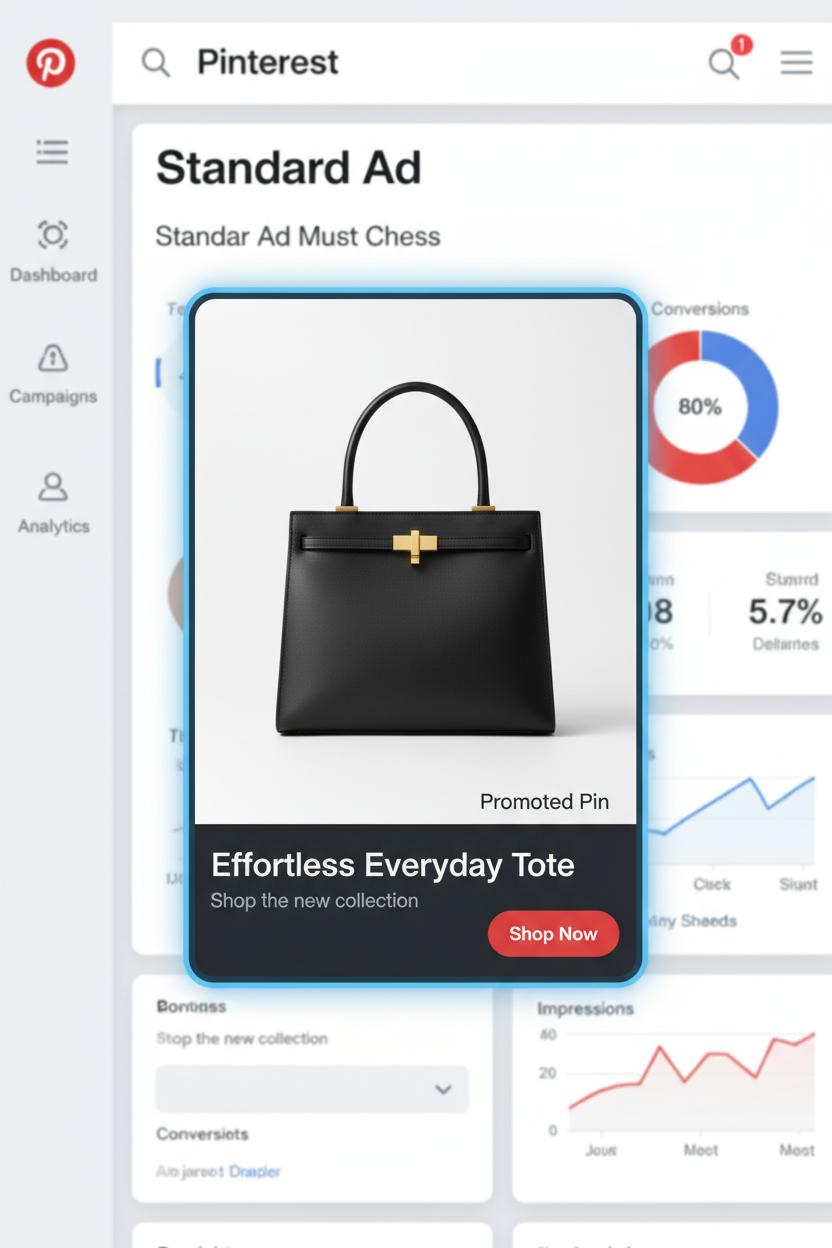
Think of promoted pins as the native, put-together cousins of your organic content—still Pins, just given a little extra sparkle to show up where it matters. In Pinterest advertising, you’ll choose a format that matches the story you’re telling. Standard (single-image) Pins are your everyday workhorse for clean product shots and simple messages. Video Pins bring the scroll-stopping motion—great for demos, reveals, and seasonal mood-setting. Carousels let you swipe through variations, steps, or collections, while Collections ads pair a hero image or video with shoppable product tiles for a catalog-meets-lookbook feel. Shopping ads pull directly from your product feed for always-on discoverability, and Idea ads shine for tutorials, recipes, and DIYs with a step-by-step vibe. As you map formats to your Pinterest marketing plan, keep brand consistency tight—social media templates, a digital marketing planner, and a living content calendar make that easier than guessing day to day (and a quick skim of a Pinterest ads book or a practical marketing course never hurts).
Your campaign objective tells Pinterest ads what to optimize for—so pick it like a compass, not a wish. Use Brand Awareness for reach and early buzz, Video Views when motion does the selling, Consideration (Traffic) when you want qualified site visits, and Conversions when you’re ready to measure checkouts, sign-ups, or add-to-carts. If you’re retail, Catalog Sales (Shopping) keeps product inventory front and center with intent-driven delivery. Match objective to creative: video for awareness lift, carousel for exploration, standard for quick clicks, shopping for bottom-funnel intent. That’s the backbone of a smart Pinterest ad strategy—let the KPI lead the creative, not the other way around.
Placements decide where your promoted pins appear. Browse reaches people in the home feed and related pins—perfect for sparking ideas and casting a wide net. Search targets high-intent moments when someone is actively looking (hello, keywords and seasonal spikes), and the Shop surfaces catch pinners in buying mode. Start with Browse + Search together to learn, then split-test: heavier Search for launches or gift guides, heavier Browse for lookbooks and inspiration. Keep visuals vertical, text minimal, and CTAs soft but clear. Revisit placements as trends shift—your content calendar will show you when seasonal intent heats up. Test, tidy, and scale the winners; that’s Pinterest advertising done with purpose.
Pinterest Marketing Funnel: From Discovery to Conversion
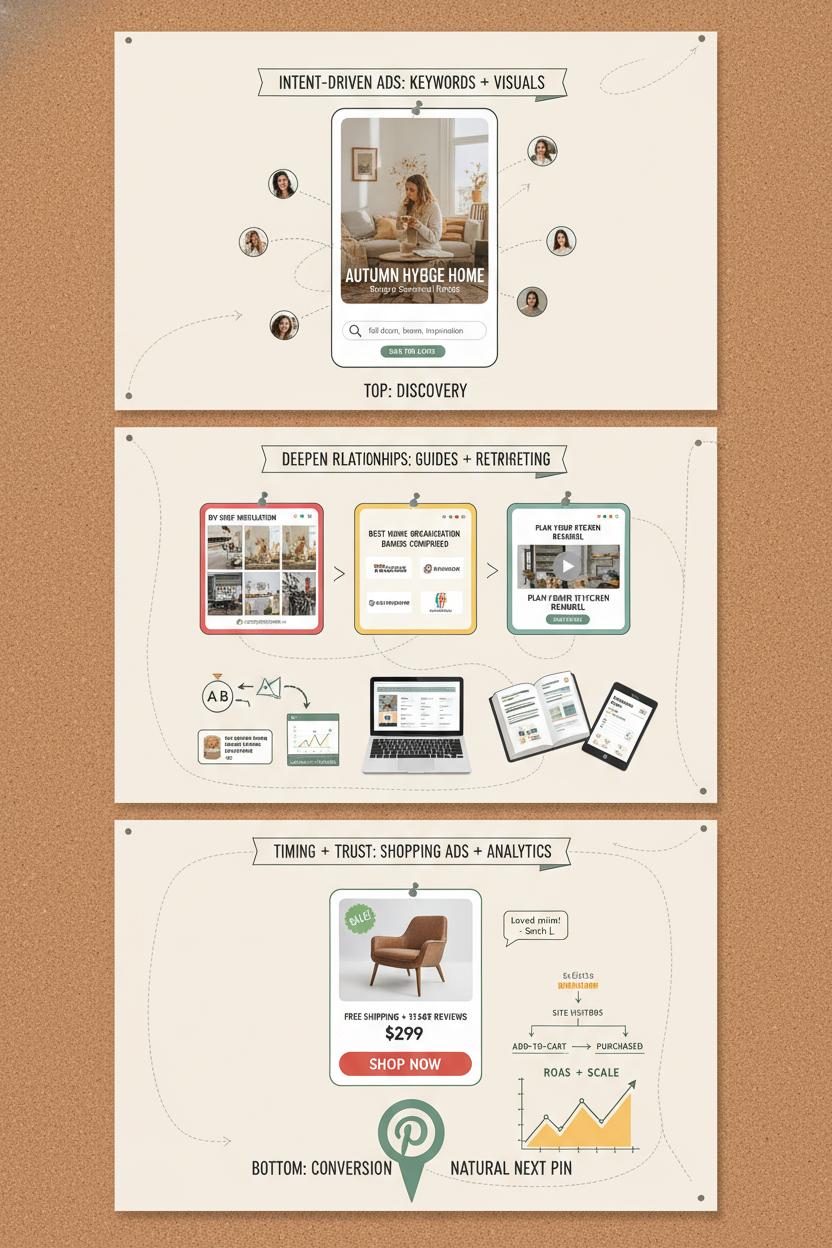
Think of the Pinterest marketing funnel like a beautiful storyboard: people arrive in discovery mode, collecting ideas and quietly shortlisting brands they’ll trust later. At the top, your job is to show up where intent lives. Use Pinterest ads to pair strong keywords with seasonal boards, trends, and lifestyle visuals that feel save-worthy. Promoted pins with interest and keyword targeting work well here, letting your brand mingle with organic content instead of shouting over it. Keep creative bright and helpful—vertical images, soft text overlays, and clear “what it is + why it matters.” This isn’t hard sell; it’s gentle intrigue. A solid Pinterest ad strategy at this stage balances reach with relevance so you seed the right people for the next touchpoint.
In consideration, you deepen the relationship. Pin collections, how-tos, and comparison guides give people a reason to click and return. Pinterest advertising shines when you A/B test headlines, landing pages, and value props, then retarget engagers to nudge them closer to action. Think “plan it, don’t wing it”: a digital marketing planner and content calendar help you keep a steady cadence, while social media templates make it easy to scale creative for different audiences without losing your brand feel. If you like playbooks, a Pinterest ads book or even a short marketing course can sharpen your messaging and bidding chops so each campaign is more intentional than the last.
At the bottom of the funnel, conversion is all about timing and trust. Retarget site visitors, add-to-carts, and pin engagers with conversion-optimized campaigns and shopping formats. Use fresh social proof, price cues, and benefit-first copy to remove friction; align landing pages with the promise on the pin. As performance stabilizes, scale in small, confident steps—expand winning keyword clusters, test adjacent interests, and raise budgets gradually while guarding ROAS. Keep feeding cold discovery so your warm pools never run dry, and let your analytics guide pacing, not panic. That’s the quiet power of Pinterest marketing: when discovery is nurtured with intention, conversion feels like the natural next pin in the board, not a pushy detour.
Creative That Converts for Promoted Pins: Pin Design, Copy, and Landing Pages
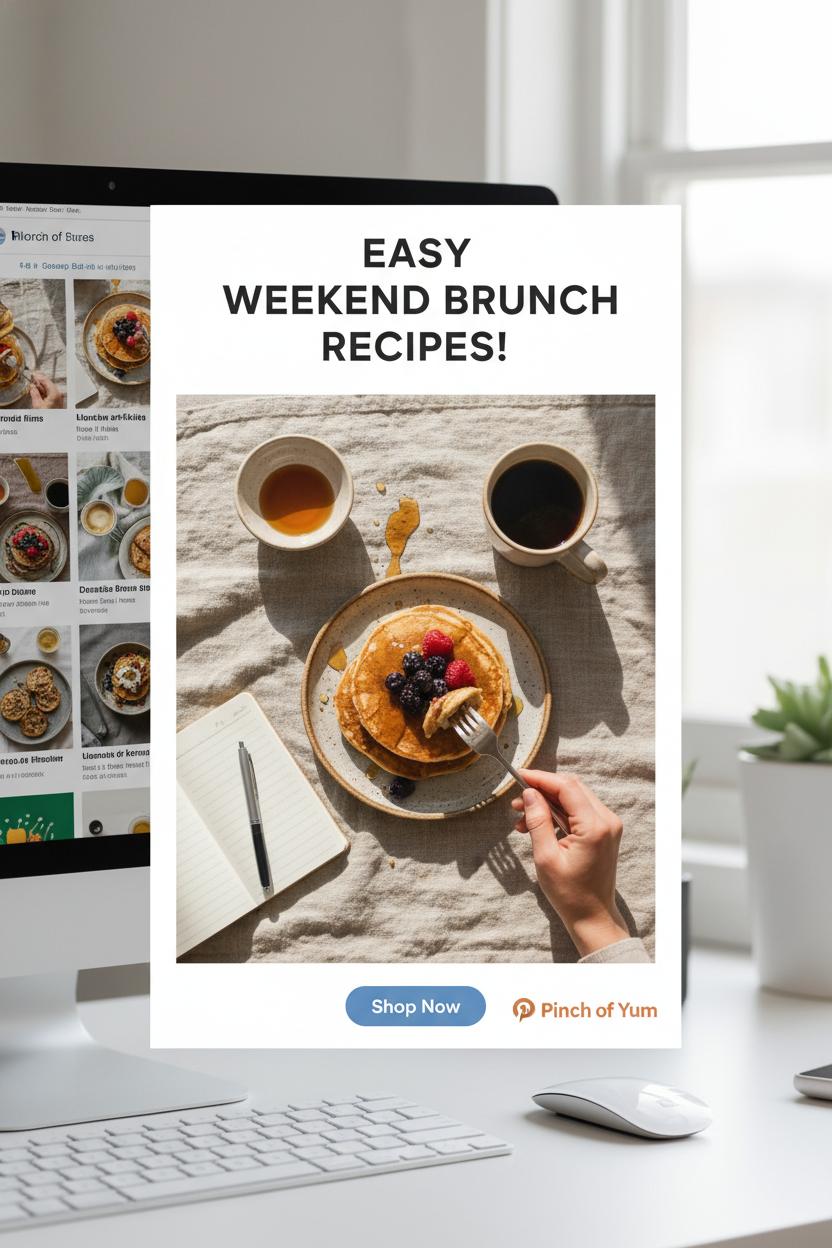
Great creative is the quiet workhorse behind profitable Pinterest ads, and promoted pins are no exception. Start with pin design that feels instantly pinnable: tall, clean, and scroll-stopping. Use a 2:3 aspect ratio and let the image do the heavy lifting—think bright natural light, tactile textures, and an “in-use” moment that shows the product or idea living in the real world. Anchor the eye with a short, benefit-first text overlay (five to seven words), keep your logo subtle but visible, and lean into brand colors so your grid looks cohesive across boards. Video promoted pins can add motion that nudges a save or tap; try gentle movement, quick how-tos, or a before-and-after that reveals the payoff by the three-second mark. Test variations like lifestyle vs. flat lay, warm vs. cool palettes, and different CTAs to refine your Pinterest ad strategy over time.
Your copy should whisper possibility and promise clarity. Lead with the transformation—what they’ll learn, make, or feel—then fold in keywords naturally for Pinterest marketing search intent. Front-load the first sentence with the core benefit, add one crisp call to action (Shop the tutorial, Get the template, Try the recipe), and sprinkle related terms without stuffing. Hashtags can be minimal; what matters is relevance and readability. Think seasonally too—refresh descriptions and overlays to track trends and keep your promoted pins aligned with moments people are already planning for. A content calendar helps you anticipate peaks; pair it with social media templates to keep output consistent when you’re scaling Pinterest advertising.
The click is only half the journey—your landing page must mirror the promise of the pin. Match the headline, imagery, and color story for instant trust. Place the hero benefit and primary CTA above the fold, keep forms short, and ensure lightning-fast mobile load times. Add skimmable proof—star ratings, quick testimonials, or a mini visual checklist—and avoid surprise pricing or bait-and-switch offers. Install the Pinterest Tag, use UTM parameters, and A/B test headlines and hero images just as you would creative. If you love structure, a digital marketing planner and a living content calendar can keep tests organized; a concise Pinterest ads book or a focused marketing course can sharpen your approach so every creative decision ladders up to a measurable, scalable Pinterest ad strategy.
Analytics & Attribution for Pinterest Marketing: Reading the Data That Matters
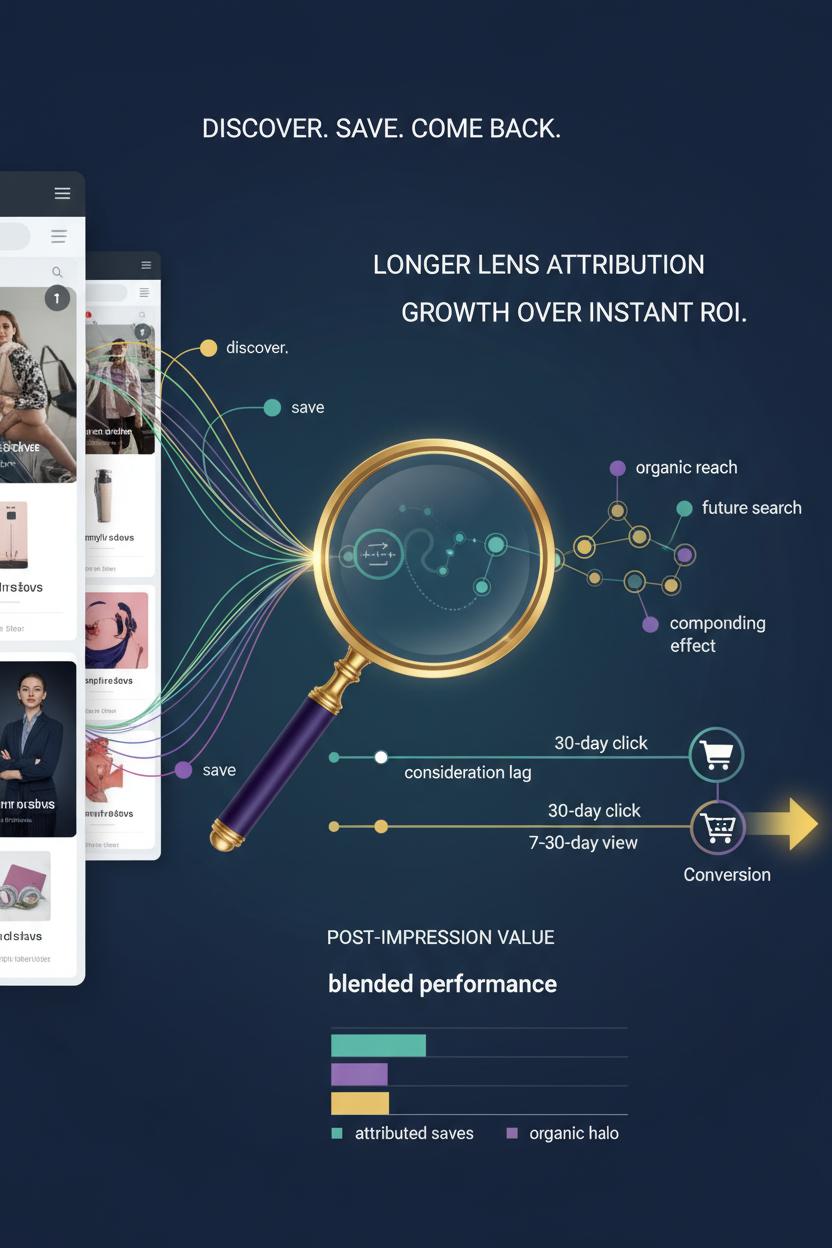
Pinterest doesn’t behave like the last-click platforms you may be used to, so your analytics and attribution should honor how people actually shop here: they discover, save, and come back when the moment is right. In practical terms, that means evaluating Pinterest ads with a longer lens. Expect consideration lag and look beyond same-day ROAS. Use a generous attribution window (30-day click, 7–30-day view) to capture the delayed impact of promoted pins, and pay attention to the compounding effect of saves, which push your content into boards and future searches. A save is intent; a close-up is curiosity; an outbound click is action. Read these signals as a ladder, not isolated stats.
Before you judge performance, make sure measurement is airtight. Install the Pinterest Tag and the Conversion API, map your funnel events (view content, add to cart, checkout), and attach UTMs to every promoted pin so you can line up Pinterest reporting with your analytics platform. In the dashboard, build a weekly ritual around a handful of telling metrics: impressions for reach, close-ups and saves for resonance, outbound CTR and CPC for efficiency, and CPA/ROAS for payoff. Layer in earned performance by checking how organic reach grows from ad-driven saves—Pinterest advertising often creates a halo that surfaces your pins long after the campaign flight.
When you dig into the data, segment first by intent, then by creative. Compare performance by keyword themes and audience types to confirm your Pinterest ad strategy is matching searcher mindsets. Pin-level analysis matters: test lifestyle versus product-forward imagery, try bolder text overlays, and vary backgrounds to reduce creative fatigue. Track cohorts by the month users first engaged with your pins to see how conversions accumulate over time. Use a content calendar to line up seasonal queries with your flights, and keep a digital marketing planner handy so you can document hypotheses and outcomes. If you like structure, a Pinterest ads book, social media templates, or even a bite-size marketing course can speed up this learning loop.
Finally, scale with soft hands. Let campaigns gather statistically meaningful data, make changes no more than once or twice per week, and allocate 10–20% of budget to creative or audience tests. Judge success on blended performance—last-click can undercount Pinterest marketing. When early signals like saves rate and cost per add-to-cart trend favorably, lean in; if they stall, rotate new creatives, refine keywords, and keep the discovery engine humming.
Workflow Tools: Use a Digital Marketing Planner and Content Calendar to Run Pinterest Ads

Before you even open Ads Manager, set up a simple workflow that keeps your ideas, images, and budgets moving in sync. A digital marketing planner paired with a living content calendar is the duo that turns inspiration into outcomes. Pinterest marketing runs on seasonality and intent, so map your big moments first—new collections, holidays, launches—and slot them into a calendar that shows what pins go live when, which boards they support, and how they ladder up to goals. This is where Pinterest ads become less ad hoc and more intentional: each week has a theme, each theme has creatives and keywords attached, and your promoted pins are scheduled to meet people right when they’re searching.
In your planner, document the backbone of your Pinterest ad strategy. List objective per campaign, audience signals (interests, keywords, actalikes), budget caps, and test plans. Create a shot list for images and videos, tie each asset to a headline, description, and URL with UTM tags, and note the exact specs so production is efficient. If you’re short on design time, load up a set of social media templates to keep branding consistent while you iterate quickly. Treat Pinterest advertising like a series of sprints: two to three creatives per ad group, one variable tested at a time, and clear checkpoints to pause, pivot, or scale. Your content calendar should also note flight dates for promoted pins alongside organic posts, so your paid and organic stories stack, not compete.
Make the calendar your command center. Add weekly reminders to review search trends, refresh hero images, rotate formats, and check budget pacing. Color-code phases—awareness, consideration, conversion—so you can see at a glance where you’re heavy or light. Keep a backlog column for pin ideas that popped up during customer calls or trend research, then drag them into future slots. If you like structured guidance, a concise Pinterest ads book or a bite-size marketing course can plug into this workflow, giving you frameworks while your planner keeps you accountable. The goal is a calm, repeatable system: ideas captured, assets created on schedule, campaigns launched cleanly, and learnings folded back into next week’s plan. Do this, and scaling Pinterest ads becomes a rhythm, not a scramble.
From Playbook to Pinterest Ads Book: Turn This Strategy into Repeatable SOPs
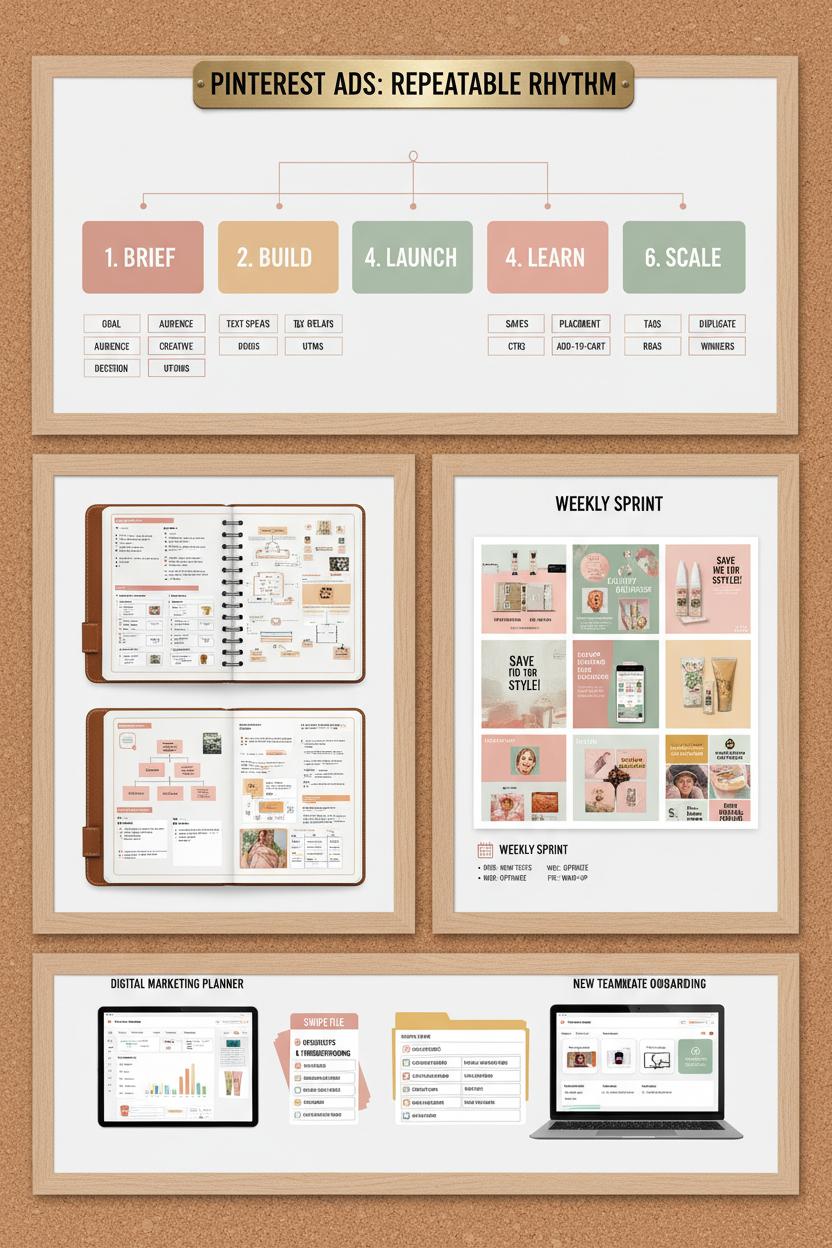
You’ve mapped your audiences, sketched budgets, and planned how to scale—now turn that momentum into a repeatable rhythm. Think of your SOPs as a cozy, well-labeled board where every pin has a purpose. Start with a single source of truth that documents your entire Pinterest ad strategy: a living “Pinterest ads book” that spells out your naming conventions, audience recipes, and testing cadence. For every campaign, capture the same steps in the same order—Brief, Build, QA, Launch, Learn, Scale—so anyone on your team can slide in and keep the magic going. In the Brief, define your goal (awareness, traffic, conversions), the primary audience (keywords, interests, actalikes), the creative angle, and the decision criteria. In Build, standardize promoted pins specs, text overlays, and descriptions; ensure your UTMs match your naming so performance reporting is seamless. QA checks placements, tags, and budgets. Launch with clear guardrails: for instance, hold 48–72 hours before judging early signals. Learn by reading saves, CTR, and add-to-cart trends alongside ROAS, then Scale in measured steps, nudging budgets and duplicating winners into new audiences.
Operationalize your Pinterest advertising like you’d style a perfect board: consistent, visually cohesive, and easy to browse. Write down your creative formulas—what colors, props, and hooks signal “save me” on mobile, how you adapt a top performer into three fresh variations, and when to rotate in seasonal content. Keep your Pinterest marketing steady with a weekly sprint: new tests on Monday, midweek optimization, Friday wrap-ups. Use a shared content calendar to pair upcoming trends with product moments, and lean on social media templates so fresh iterations don’t require reinventing the wheel. Store your best headlines, pin descriptions, and call-to-pin phrases in one swipe file, then tag by funnel stage to match creative with campaign goals.
SOPs blossom when your toolkit is tidy. A digital marketing planner keeps budgets and pacing in check; your Pinterest ads book houses checklists, screenshots, and troubleshooting steps; and a lightweight marketing course for new teammates ensures the same vocabulary for targeting, bidding, and measurement. The result is a system where Pinterest ads don’t just perform once—they perform on repeat, season after season, pin after pin.
Next Steps and Resources: Templates, Checklists, and a Marketing Course to Sharpen Your Pinterest Ad Strategy

You’ve sketched your audience, mapped your funnel, and picked your creative angles—now let’s make it stick with a simple toolkit you’ll actually use. Start by turning your goals into a living workflow: a weekly planning session with your digital marketing planner open, your content calendar dotted with seasonal moments and launch dates, and a small library of social media templates ready to remix into fresh Pin variations. Build a creative bank that pairs visuals with copy hooks, keywords, and landing pages so every test has a home. Keep your workflow cozy and repeatable: brief, build, publish, measure, refine. When Pinterest ads feel like a habit, performance follows.
Create a lightweight checklist you revisit before every flight. Does each image feel scroll-stopping at a glance, branded yet clean, sized vertically, with text overlays trimmed for mobile? Are your headlines clear on the benefit, not just the feature? Is the landing page consistent with the Pin’s promise, fast on mobile, and tagged for conversions? Did you choose the right objective and audiences for promoted pins, and set budgets with room for learning? Add naming rules for UTM links, schedule a weekly performance review, and jot scaling thresholds so you’re not guessing. If you like deeper frameworks, keep a Pinterest ads book within reach for creative formulas and bidding tactics, and consider a short marketing course to sharpen the edges of your Pinterest ad strategy—especially if you’re newer to auction dynamics or want a refresher on creative diagnostics. Treat Pinterest advertising like a craft: small, steady improvements beat big, sporadic pushes.
Finally, assemble a resource hub you’ll actually open. Save top-performing Pins as a swipe file, keep a folder of editable templates for static, video, and collections, and maintain a campaign QA checklist that travels with you from brief to post-launch. Add a calendar reminder for seasonal trend research so your Pinterest marketing taps into what people are already searching for. Give yourself a daily 15-minute ritual: review yesterday’s cost per result, scan search terms, rotate in one new creative, and note what to pause, protect, or scale. The beauty of promoted pins is compounding discoverability—organized systems, simple checklists, and a few trusted tools make sure your ideas keep showing up in all the right searches.
Conclusion
Consider this your warm wrap-up: dial in targeting, set a calm, test-friendly budget, and scale what sparkles. With Pinterest ads, you meet intent-rich Pinners where inspiration begins. Pair scroll-stopping creatives with keyword-led boards, try promoted pins across funnel stages, and let analytics guide each step. A simple Pinterest ad strategy—test, learn, optimize—keeps Pinterest advertising effortless. Brew a coffee, pin your plan, and let Pinterest marketing turn ideas into conversions, one cozy campaign at a time.